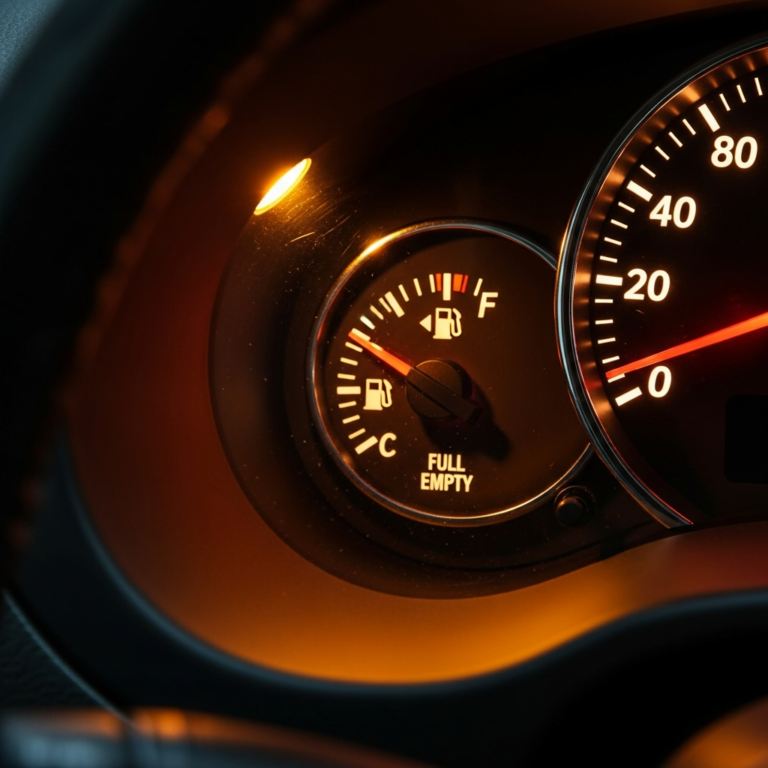

In the week commencing 14 September 2026, the average UK pump price for diesel was 190.72 pence a litre. For a private hire driver covering a thousand miles a week, that is the single largest controllable cost in the business — which is why the economy remap question comes up so often, and why it deserves a straighter answer than “up to 20% better MPG”.
Does an economy remap save a taxi driver money?
It can, but only where fuel is a large enough share of your weekly costs for a small percentage to matter. The saving is a percentage of what you already spend, so mileage decides the payback, not the remap. And on a licensed vehicle, the licensing authority’s permission comes before the ECU work.
Start with your licence conditions, not with the remap
This is the part most tuning pages skip entirely, and it is the part that can cost you a licence rather than a few pounds. A licensed hackney carriage or private hire vehicle is not simply your car.
City of Wolverhampton Council — which licenses an enormous number of the private hire vehicles working across the West Midlands — puts it plainly in its vehicle licence conditions: no material alteration or change in the specification, design, condition or appearance of the vehicle shall be made without the prior approval of the licensing authority, and where approval is obtained the letter of approval must be kept within the vehicle.
Read that twice if you are about to book any work. It is drafted broadly, it is not limited to bodywork, and the burden of asking first sits with the proprietor. Other West Midlands authorities carry conditions in similar terms, so the answer is the same wherever your plate came from: ask your own licensing office, in writing, before anything is written to the ECU.
Our position on this is simple and occasionally unpopular. We would rather lose the booking than put software on a plated vehicle whose owner has not checked. Ask, get it in writing, keep the letter in the car.

The payback sum, done honestly
Here is the arithmetic, with the assumptions on the table so you can swap in your own figures rather than ours.
Take a driver covering 1,000 miles a week and genuinely averaging 45 mpg. That is roughly 22 gallons, or about 101 litres, every week. At 190.72p a litre that is around £193 a week on diesel — a little over £10,000 a year.
| If the real-world saving is… | Weekly | Annually |
|---|---|---|
| 3% | about £5.80 | about £300 |
| 5% | about £9.60 | about £500 |
| 8% | about £15.40 | about £800 |
Notice what that table does and does not say. It does not claim you will get any of those percentages — we deliberately have not put a number on the saving, because the honest one depends on the vehicle, the driver and the work pattern. What it shows is the shape of the decision: at high mileage, even a modest percentage becomes a real figure, and at low mileage the same percentage never pays for anything.
So the first question is not “how much will it save?” It is “how many miles am I actually doing, and what am I actually averaging?”
Measure your baseline before you change anything
You cannot judge a result you never measured. Before any work, we ask drivers to do something unglamorous for two or three weeks: brim the tank, log the odometer, and record litres and miles at every fill. Not the trip computer — those read optimistically, and the error is not consistent.
That gives you a genuine pence-per-mile figure. Afterwards, the same measurement over the same kind of work tells you whether anything actually changed. Two or three tanks, same routes, same season. It is the only method that survives contact with reality.
It also protects you. A driver with a baseline can hold any tuner to account, including us.

What an economy calibration actually changes
“Economy remap” is a loose phrase, so it is worth saying what sits behind it on a modern diesel.
The work targets the part of the map you live in — light to medium load, steady throttle, the cruise and the pull away from a junction. Injection timing and quantity, boost targets and the shape of the torque curve are adjusted so the engine makes the torque you are already asking for at a slightly lower cost, and so you spend less time with your foot deeper into the pedal to hold a speed.
What it cannot do is change physics. Air resistance at 70mph, the weight of four passengers and their luggage, cold starts, idling on a rank and the fuel burned in a DPF regeneration are all untouched by a calibration. That is precisely why the honest saving is a modest percentage rather than the headline numbers that get advertised.
It is also why driving pattern matters as much as software. The same car, same map, same week, driven two different ways will return two different figures — and the driver has more influence over that than we do.
Where economy tuning helps a PHV, and where it does not
It tends to help
Steady, higher-mileage work — airport runs, contract school and hospital transport, longer intercity jobs — where the engine spends real time at cruise. Calibration changes that improve part-load efficiency have somewhere to act.
It tends not to help much
Short-hop city work in Birmingham or Wolverhampton traffic, where the engine is cold or idling for a large share of the shift. Idle burns fuel that no map can recover, and stop-start town work is also where a diesel’s particulate filter struggles most.
That second point is worth taking seriously if you drive a diesel on city work. A filter that never gets hot enough to complete a regeneration will eventually put you off the road at the worst possible moment — our guide to why the diesel warning light keeps coming back explains the pattern. Fixing that is usually worth more to a taxi driver than any fuel map.
The emissions hardware stays fitted, incidentally. On a licensed vehicle that is not even a debate — a DPF removal is an MOT failure and a road-legality problem, and a plating inspection is not the place to discover it.
What we check before touching a working vehicle
- Your licensing authority’s written approval. First, every time.
- Stored and pending fault codes. A high-mileage PHV usually has history worth reading.
- DPF and, where fitted, AdBlue system health. Economy work on a marginal emissions system is a false saving.
- Service condition. Filters, oil, injector performance. Half the “my MPG has dropped” complaints we see on high-mileage cars are maintenance, not calibration.
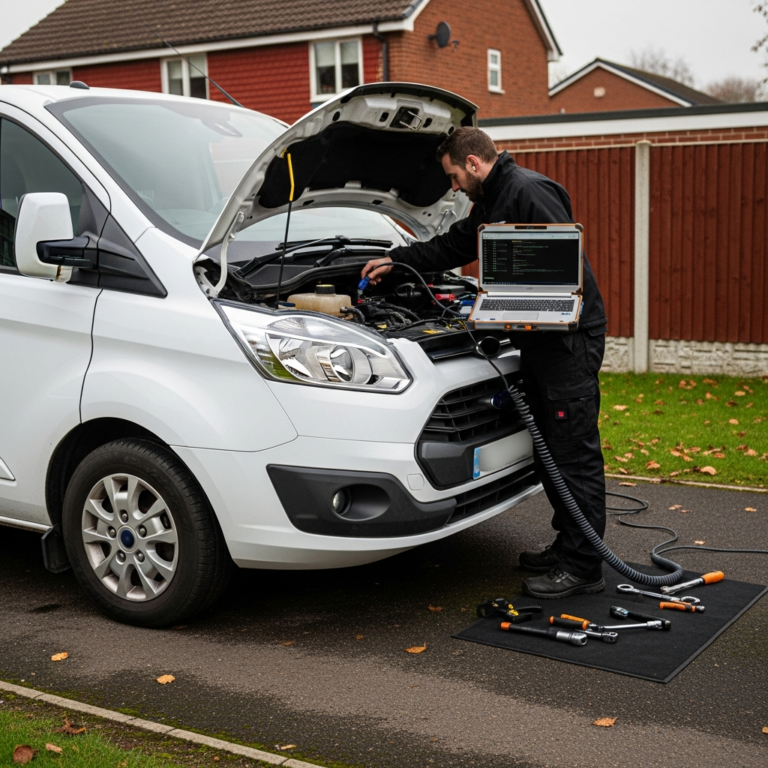
- Downtime. We work mobile, so the vehicle stays where it is and the job happens between shifts rather than costing you a day off the road.
If your vehicle is a van rather than a car, the same logic applies at a different scale — we cover that on our commercial vehicle and fleet tuning guide. For older, harder-worked cars, whether a high-mileage vehicle is worth remapping at all is the more useful read.
The general background to fuel-focused ECU work — what it is, what it is not, and the physics it cannot escape — sits on our guide to economy tuning and whether it really saves fuel. This page is the taxi and private hire version of that conversation.
Questions private hire drivers ask us
Do I have to tell my council if I remap my taxi?
Assume yes and check in writing. Wolverhampton’s conditions require prior approval for any material alteration to the specification of a licensed vehicle, and other West Midlands authorities use similar wording. Contact your own licensing office, get the answer in writing, and keep the letter in the vehicle.
Will an economy remap affect my insurance?
It is a declarable modification on most policies, and on hire and reward cover you should expect the underwriter to want to know. Declare it before the work rather than after. An undeclared modification found during a claim investigation is a far more expensive problem than a small premium adjustment.
How long before an economy remap pays for itself?
Divide the cost of the work by your weekly fuel spend multiplied by whatever saving you actually measure. At 1,000 miles a week and current diesel prices, a 5% saving is roughly £9 to £10 a week. Run your own mileage through that sum before you book anything — and if the numbers do not work, they do not work.
Is it worth doing on a hybrid taxi?
Usually not for fuel reasons. Most hybrid PHVs run petrol engines under a hybrid control strategy where the gains an economy calibration targets on a diesel simply are not available in the same way. We would rather tell you that up front than take the booking.
Mobile Economy Tuning for Taxi and Private Hire Vehicles
FM Auto Remapping covers Birmingham, Wolverhampton, Walsall, Solihull, Coventry, Dudley, West Bromwich, Willenhall and the surrounding areas. Bring us your mileage and your MPG and we will tell you honestly whether the sum works for your vehicle — before anything is written to the ECU.