When a car cranks but won’t start, you are looking at one of the most expensive faults to guess at. The starter works, so the battery looks fine. The dashboard lights up, so the electrics look fine. And that is exactly the point where people start buying parts. The fault usually comes down to one of four things: fuel, spark or glow, the signals the engine computer needs to run, or the security system refusing permission.
Why does a car crank but not start?
When a car cranks but won’t start, the starter motor is working but the engine is not getting everything it needs to fire: fuel, a spark (or glow plug heat on a diesel), a correct engine speed signal to the ECU, and permission from the immobiliser. Finding which one is missing, before replacing parts, is the whole job.
Cranking and starting are two different things
It is worth being precise about the symptom, because the words people use cover several different faults.
- No crank at all. You turn the key or press the button and nothing turns, or you hear a single click. That usually points at the battery, the starter circuit or the starter itself.
- Slow crank. The engine turns, but lazily. Low battery voltage is the first suspect, and low voltage can cause its own no-start even when the engine does turn.
- Normal crank, no start. The engine spins at a healthy speed but never catches. This is the one this guide is about.
- Starts, then dies. It fires for a second or two and cuts out. On many cars that pattern is associated with the immobiliser, though fuel delivery faults can do the same.
If you ring anyone for help, describe which of these it is. It halves the diagnosis time.
Car cranks but won’t start: what you can safely check first
None of these need tools, and any one of them can save you a call-out:
- Fuel. It sounds obvious, but a gauge that reads a little above empty on a slope can be misleading. On a diesel, running completely dry can let air into the system, and many diesels will then crank for a long time before they fire, or not at all.
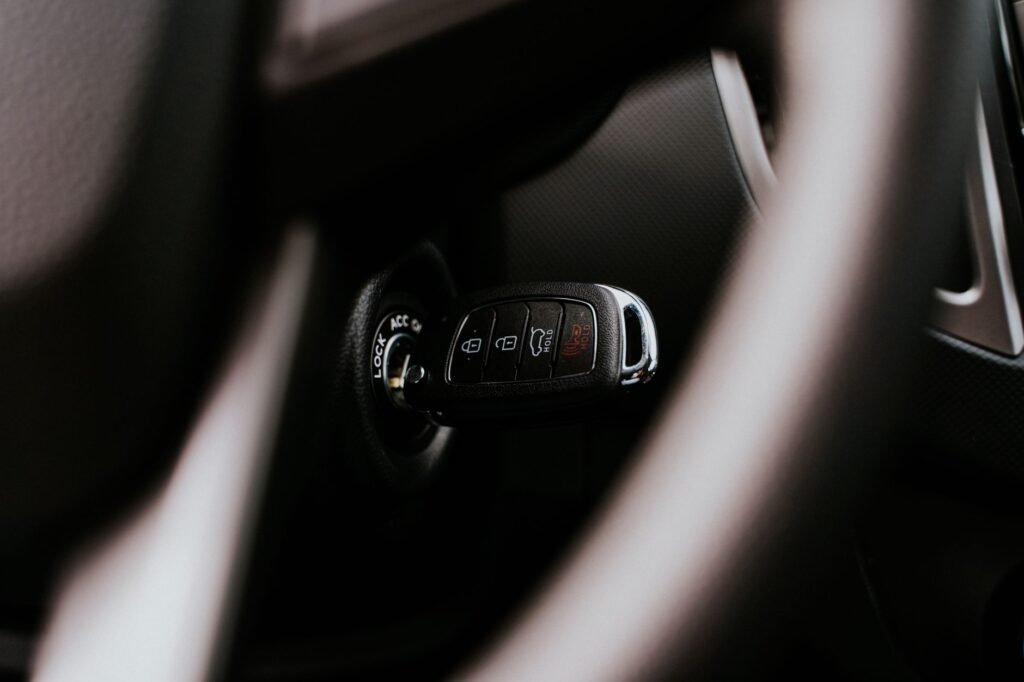
- The security light. Watch the immobiliser or key symbol on the dash when you switch on. If it flashes or stays on when it normally goes out, the car may not be recognising the key.
- The spare key. If the car starts on the spare, the problem is very likely the first key or its battery, not the engine.
- The glow plug light on a diesel. Wait for it to go out before cranking, particularly on a cold morning.
- Recent work. A new battery, a jump start, a fuel filter change or any electrical work in the last few days is a strong clue. Tell whoever diagnoses the car.
- Outstanding recalls. Some no-start faults are known manufacturer problems. You can check whether your car has an outstanding safety recall on GOV.UK using the registration number, and recall repairs are carried out by the manufacturer, usually at no cost to you.
What we would steer you away from is repeated long cranking. Cranking for a long time in one go drains the battery and heats the starter, and a flat battery on top of the original fault makes the diagnosis harder, not easier.
Symptom and likely area: a quick guide
This is not a diagnosis, and every car is different. It is a way of narrowing things down so the conversation with a technician starts in the right place.
| What you notice | Area to look at first |
|---|---|
| Security or key light flashing, or car starts then cuts out after a second or two | Immobiliser: key, key battery, transponder recognition, or communication between modules |
| Normal crank, rev counter needle does not move at all while cranking | Engine speed signal: on many cars the rev counter uses the crankshaft sensor signal, so no movement is a useful clue |
| Diesel, cold morning, cranks for ages then may catch | Glow plugs, glow plug control, or fuel starvation |
| Diesel, after running out of fuel or a filter change | Air in the fuel system |
| Petrol, smell of fuel, will not catch | Ignition side: coil packs, plugs, or flooding |
| Started after a new battery or jump start, several warning lights on | Low voltage during the event, or modules that need to re-learn or re-communicate |
| No communication with the engine ECU on a scan tool | ECU power supply, earth, fuse, wiring or the ECU itself |
The order we check things in
Good diagnosis moves from cheap and likely to expensive and rare. When we attend a crank-no-start anywhere in the West Midlands, the sequence looks like this.
1. Battery voltage while cranking
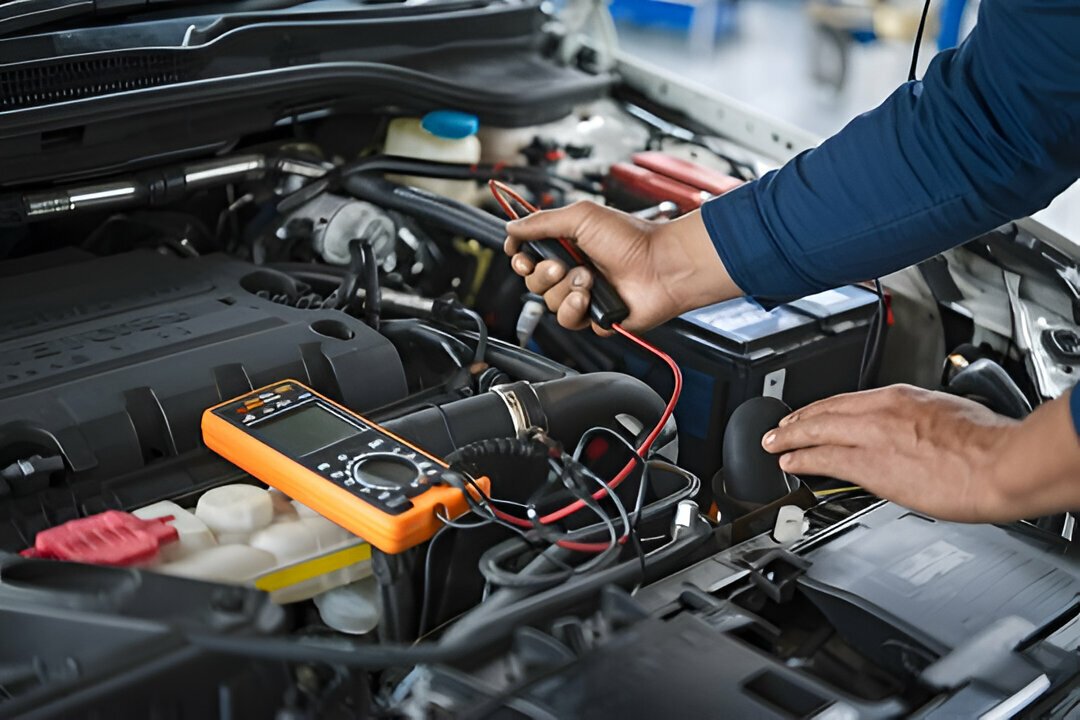
Resting voltage tells you very little. What matters is how far the voltage falls while the starter is turning. Modern engine and security modules can refuse to operate properly when voltage dips too low, even though the starter still spins. A weak battery can produce a crank-no-start that looks like a much more serious fault.
2. Full fault scan across all modules
Not just the engine ECU. A crank-no-start can be logged by the immobiliser, the body control module or the instrument cluster, and the most useful code is often not in the engine module at all. We also note whether each module is communicating, because a module that will not talk is a finding in its own right.
3. Live data while cranking
This is where most of the answer usually comes from. With a scan tool connected, we watch what the ECU sees while the engine turns over: engine speed, fuel rail pressure on a diesel, and the immobiliser status. If the ECU does not see engine speed, it will not fire the injectors. If rail pressure never builds, the problem is on the fuel side. If the immobiliser status says the key is not authorised, we know where to look.
4. Fuel, ignition and glow checks
Once live data points somewhere, we test that area directly rather than swapping parts in turn.
5. Wiring, power and earth to the ECU
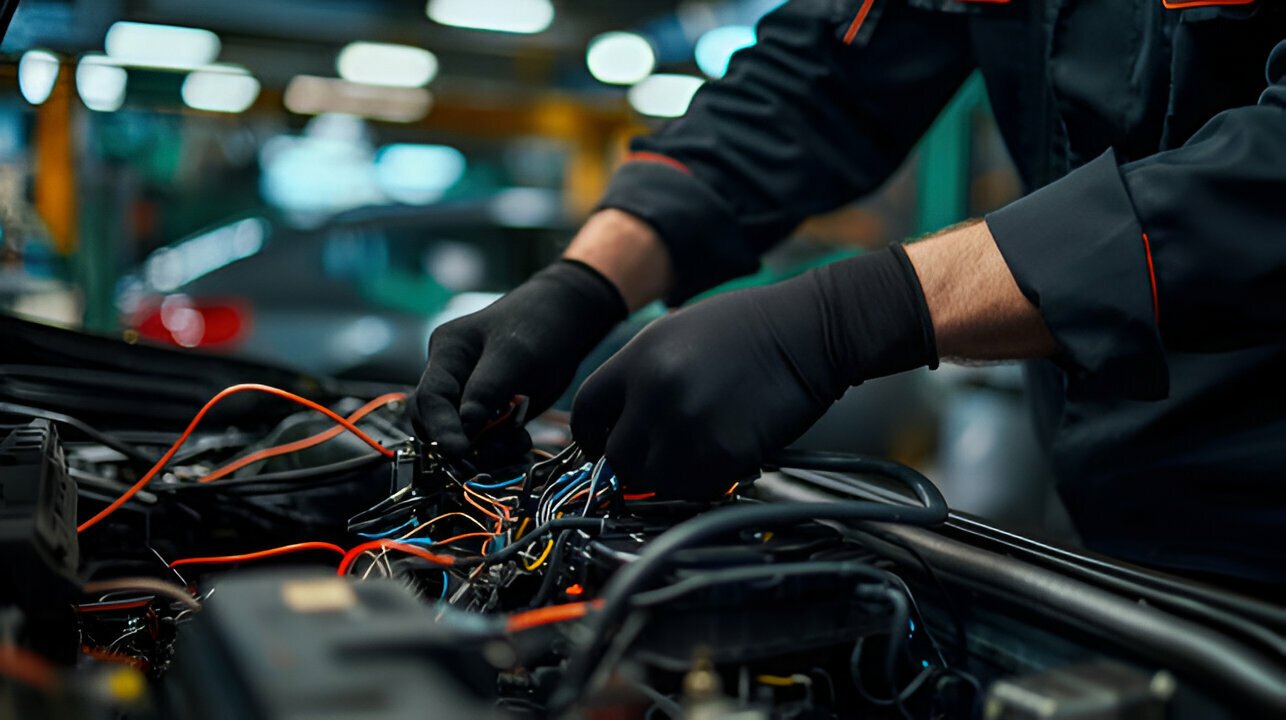
If the engine ECU is not communicating, the next step is to prove its power supplies and earths before anyone condemns it. Corroded connectors, water ingress and damaged looms cause a surprising share of “dead ECU” diagnoses.
When it really is the ECU or immobiliser
Most crank-no-start faults turn out to be batteries, fuel, sensors or wiring. But some genuinely are electronic, and those are the ones where a general garage can get stuck.
- Immobiliser and key recognition faults. The engine ECU and the security system have to agree that the key is valid. If that handshake fails, the engine will crank but the ECU will not allow it to run. The cause can be the key, the reader, the wiring, or the modules losing their pairing after a fault or a replacement part.
- ECU internal faults. Water damage, failed components or corrupted software can stop an ECU from running the engine. The question then becomes repair, reprogram or replace — and replacing an ECU usually means the new unit must be matched to the car.
- Body control module faults. On many modern cars the BCM plays a part in the security system, so a BCM fault can present as a no-start.
This is where FM Auto Remapping’s work comes in. Alongside remapping, we carry out ECU programming, BCM repair and cloning, module coding and vehicle electrical repair, and we do the diagnosis on your driveway. Our diagnostics and repair services page lists the full range.
If the diagnosis points at the engine computer, our articles on whether an ECU needs repair or replacement and on when a software reprogram is the right fix explain the options before you spend anything.
Why we would rather diagnose than guess
Here is our honest view. A crank-no-start is the fault where guessing costs the most. A starter motor, a crankshaft sensor, a fuel pump and an ECU can all be blamed for the same symptom, and they vary enormously in price. It is not unusual for a car to have had several of those replaced and still have the original fault.
A diagnostic visit is a known cost; a run of guessed parts is not. Diagnosis also tells you whether the car is safe to drive once it is running, which matters if the fault is intermittent. Our guide to mobile ECU testing and what a good diagnosis should include sets out what you should expect from any technician, us or anyone else.
And if the diagnosis says the fault is something we do not do, we will tell you, and tell you who does.
Crank-no-start questions
Can a bad battery cause a crank but no start?
Yes. A battery can have enough charge to turn the starter but let the voltage fall so far while cranking that the engine and security modules cannot operate properly. That is why we test voltage during cranking, not just at rest.
Can a faulty crankshaft sensor stop a car starting?
It can. The ECU uses the crankshaft sensor to know the engine is turning and where it is in its cycle. Without that signal, many engines will crank but not start. On a lot of cars the rev counter stays at zero while cranking when this signal is missing, which is a useful clue, though not proof.
How do I know if the immobiliser is stopping my car from starting?
Common signs are a flashing security or key light on the dashboard, the car starting and cutting out after a second or two, or the car starting normally on the spare key. A diagnostic scan will confirm it by reading the immobiliser status and any stored security faults.
Is it safe to keep trying to start the car?
A few short attempts are fine. Long, repeated cranking drains the battery and heats the starter, and on a diesel that has run out of fuel it rarely helps. If it has not started after a few tries, stop and get it diagnosed.
Mobile No-Start Diagnostics Across the West Midlands
FM Auto Remapping covers Birmingham, Wolverhampton, Walsall, Solihull, Coventry, Dudley, West Bromwich, Willenhall and the surrounding areas. Tell us the make, model and exactly what the car does when you try to start it, and we will tell you what we would check first.