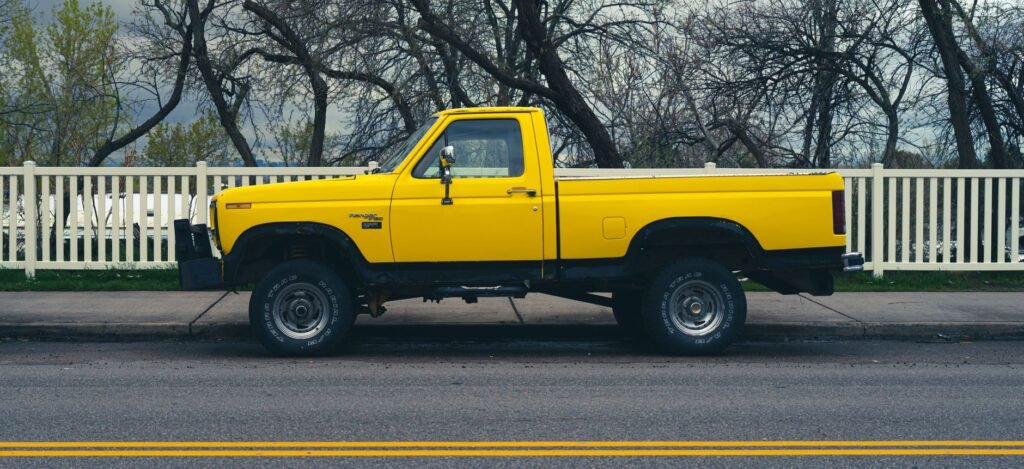
A pickup is the only vehicle most people own that is a family car on Sunday and a working tool on Monday. That split is exactly why pickup remapping is a different conversation to tuning a hatchback — and why the questions worth asking are about load, duty cycle and how the vehicle is classified, not about a headline horsepower number.
Short answer
Pickup remapping rewrites the factory engine calibration on a Ranger, Hilux, Navara or D-Max to improve torque delivery low in the rev range, where a loaded 4×4 actually works. It is software only: nothing is removed, the original file is saved, and the DPF and emissions systems stay fitted. The gain most owners notice is fewer downshifts and less throttle for the same job.
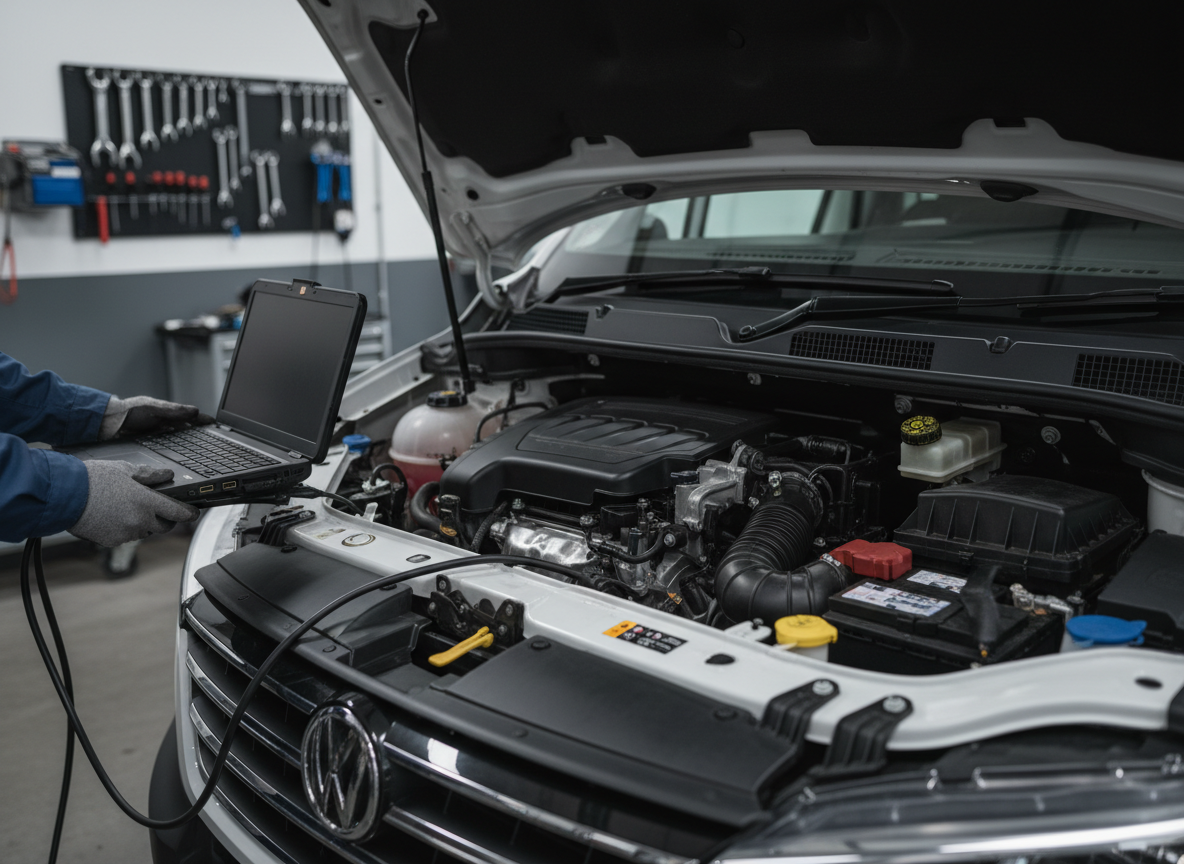
Why Pickups Are Calibrated Conservatively From New
A manufacturer has to sign off one calibration that works for every buyer of that model, anywhere it is sold. For a pickup that means a farm in Shropshire, a construction site in the Black Country, a hot climate with poor fuel, and an owner who never puts anything in the bed at all.
The safe answer for all of those at once is a soft map. Fuelling and boost are held back through the low and mid range, and the vehicle relies on the gearbox and your right foot to make up the difference. Empty, you barely notice. Add 600kg of aggregate, and you notice on every hill.
That is the honest case for remapping a pickup. It is not about making a working vehicle fast. It is about the engine delivering, in the 1,500–3,000rpm band, what the hardware is already built to handle.
The Four Pickups We See Most in the West Midlands
Ford Ranger
Comfortably the most common pickup we are called out to, across the 2.2 and 3.2 five-cylinder generation and the later 2.0 EcoBlue. Owners typically want mid-range response for site and motorway work rather than outright speed. The later EcoBlue engines are emissions-heavy and want a clean bill of health before anything is written.
Toyota Hilux
The Hilux is bought for durability, and its owners tend to be the most cautious about modifying anything — reasonably so. The 2.4 and 2.8 D-4D engines respond well, but the conversation with Hilux owners is usually about keeping the vehicle boringly reliable while sharpening the part that annoys them, which is normally throttle response from low revs.
Nissan Navara
Both the 2.5 dCi and the later 2.3 dCi twin-turbo turn up regularly. Navara owners often come to us with an existing complaint — hesitation, a warning light, a soft turbo — and it is worth being clear that those are diagnostic jobs first. A remap on top of an unresolved fault just hides it for a while.
Isuzu D-Max
The D-Max is a genuine workhorse and is usually the most heavily loaded pickup on our list. The 1.9 diesel in particular benefits from a calibration that suits a vehicle spending its life near its payload limit rather than empty.
Whichever of these you have, we read the vehicle before we quote an outcome. We do not publish a table of power figures, because the real answer depends on your engine variant, its mechanical condition and the software already on the ECU.

What Most Pickup Tuning Guides Get Wrong
Search for pickup remapping and you will be told, repeatedly, that a remap fixes DPF problems. That is the wrong way round, and it is the single most expensive misunderstanding we deal with.
A working pickup often lives on short, cold, low-speed journeys — yard to site, site to merchant, merchant back to yard. That duty cycle is the classic reason a diesel particulate filter never reaches the temperature it needs to complete a regeneration. Soot accumulates, the light comes on, and eventually the vehicle goes into limp mode.
Improving combustion can reduce how fast soot builds up going forward. It does not empty a filter that is already loaded, and it does not repair a failed differential pressure sensor, a leaking injector or a sticking EGR valve. If your DPF light is on now, that is a diagnostic job — our guide on what to do when the DPF warning light appears covers the first steps, and limp mode causes and diagnosis covers what happens if it is left.
Our position is straightforward: fix the vehicle, then calibrate it. Not the other way round.
Emissions equipment is not on the table
Every DPF, EGR and SCR component fitted to your pickup from new stays fitted. The MOT inspection manual records evidence that a diesel particulate filter has been tampered with as a major defect, and a DPF-equipped vehicle emitting visible smoke of any colour is also a major defect. For a vehicle you rely on for work, an MOT failure is not a theoretical problem.
Two Rules That Catch Pickup Owners Out
Neither of these is changed by a remap, but both come up often enough on driveways that they are worth setting out properly.
1. Your speed limits may not be car limits
Pickups are goods vehicles, and goods vehicles have their own national speed limits. On GOV.UK, goods vehicles not exceeding 7.5 tonnes maximum laden weight are limited to 50mph on single carriageways and 60mph on dual carriageways, against 60 and 70 for cars. The exception is that a vehicle weighing no more than 2.04 tonnes unladen may qualify as a ‘dual-purpose vehicle’ and take car limits — which is why two pickups on the same road can lawfully be doing different speeds. Check your own vehicle’s figures rather than assuming.
2. Double cab tax treatment changed
If your pickup is a company vehicle, the benefit-in-kind position moved. HMRC guidance states that from 6 April 2025 most double cab pickups are expected to be classified as cars when calculating the benefit charge, with transitional arrangements for vehicles purchased, leased or ordered before that date. That is a question for your accountant, not for us — but it explains why a lot of owners are now keeping an existing pickup longer rather than replacing it, and getting more interested in how well it drives.
What We Change, and What We Check First
A remap on a working vehicle is only worth doing if the vehicle is mechanically honest underneath it.
Before any software is written
- Full fault code read, stored and pending, not just what is lit on the dash
- Turbo and boost behaviour under load
- DPF soot and ash loading, and whether regenerations have been completing
- Oil condition and service history — a stretched interval is a reason to wait
- Automatic gearbox behaviour, since gearbox torque limits can be the real constraint
What the calibration actually alters
- Fuelling and injection timing across the rev range
- Boost pressure, within the limits the turbo and engine were designed around
- Throttle and pedal mapping for a more usable response from low revs
- Torque delivery where a loaded pickup spends most of its working life
What it does not alter is your payload rating, your plated weights, or the condition of anything mechanical. If a component is tired, a remap will find it sooner rather than later. Our post on ECU diagnostics before remapping explains the order we work in and why.
Mobile Pickup Remapping West Midlands Owners Can Book at the Yard
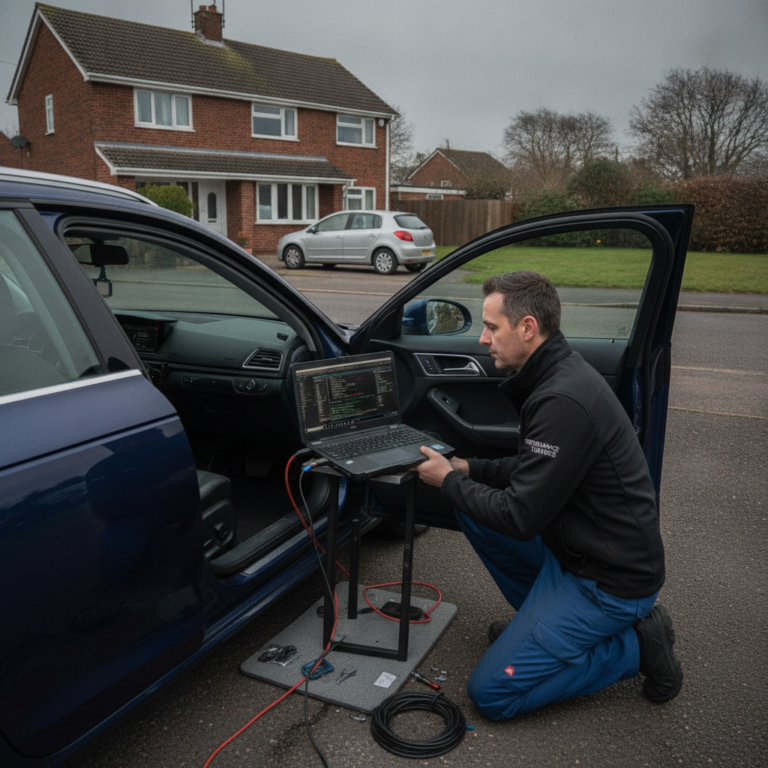
FM Auto Remapping is based in Willenhall and operates as a fully mobile service, which suits a vehicle that earns its keep. We come to your yard, site or home rather than taking the pickup off the road for a day.
We cover Birmingham, Wolverhampton, Walsall, Dudley and Coventry, plus West Bromwich, Solihull and the surrounding towns.
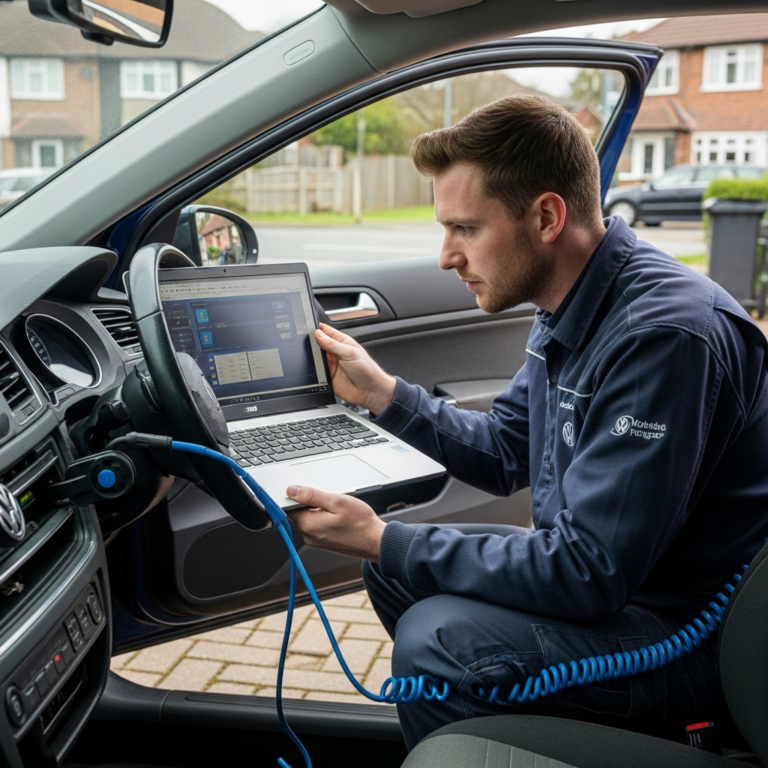
The appointment itself is straightforward: we connect to the vehicle, read and save the original calibration, apply the new file, then verify it has taken correctly. The original file is kept, so the pickup can be returned to standard whenever you want. Most jobs take one to two hours on site — what to expect on remap day runs through it in full.
Nearly every pickup we work on is a Stage 1 remap, which works with the vehicle in standard mechanical condition. Stage 2 requires supporting hardware and is rarely the right answer for a working vehicle.
Book a Pickup or 4×4 Remap in the West Midlands
Tell us the model, the engine and what the vehicle actually does day to day. We will tell you what a remap will change on your pickup — and if it needs diagnosing first, we will tell you that instead.
Pickup Remapping West Midlands: FAQ
Will a remap damage my pickup or shorten its life?
A calibration written within the engine and turbo’s design limits, on a vehicle that is mechanically healthy and properly serviced, is not the thing that shortens a pickup’s life. Neglected servicing and unresolved faults are. That is why we read the vehicle first and will decline the work if it is not ready.
Do I need to tell my insurer I have had my pickup remapped?
Yes. A remap changes engine output and is a modification, so it must be declared. Failing to declare it is a breach of your policy and could result in a claim being refused. If the vehicle is insured commercially, tell your broker.
Can a pickup be remapped with the DPF still fitted?
Yes, and that is the only way we do it. The DPF, EGR and SCR systems remain fitted and working. If the filter is the underlying problem, it needs cleaning and diagnosing — see DPF cleaning versus forced regeneration for which approach suits which case.
Will remapping improve fuel economy on a Ranger or Hilux?
It can, provided your driving does not change. More torque low down means less throttle and fewer downshifts for the same load, which tends to show up over a working week rather than on a single trip. Drive it harder because it feels better, and the saving disappears.
Can the remap be reversed if I sell the pickup?
Yes. We save the original calibration before any changes are made and keep it, so the vehicle can be returned to its factory file. Some owners do this before a sale or a dealer service visit.