Nearly every enquiry about a Peugeot or Citroën 1.6 BlueHDi remap in the West Midlands opens with a power figure somebody has read online. We are going to do the unfashionable thing and not quote one back, because BlueHDi is a badge that PSA used across several different diesel engines — and until the ECU has been read, nobody honestly knows which one is in front of them.
Can a Peugeot or Citroën 1.6 BlueHDi be remapped?
Yes. A 1.6 BlueHDi is remapped through the OBD port by rewriting the engine ECU’s calibration — fuelling, boost and torque limits. The emissions hardware stays fitted and working. What the vehicle gains depends on the exact engine code and turbo variant, which is read off the car rather than assumed from the badge.
The badge on the boot is marketing, not an engine code
BlueHDi is PSA’s name for its Euro 6 diesel family, introduced when SCR and AdBlue arrived on the group’s cars and vans. It is a family name, not a part number. Over the life of that badge, Peugeot and Citroën sold 1.6-litre and 1.5-litre BlueHDi units, in several power outputs, with more than one turbo specification and more than one ECU.
That matters for one blunt reason. Two cars can wear the identical BlueHDi badge, sit on the same forecourt, and need completely different files. A remap written for the wrong variant is not a mild mismatch — it is a calibration aimed at hardware the car does not have.
The same trap runs through the range. Peugeot fitted BlueHDi engines across the 208, 2008, 308, 3008, 5008, 508, Partner and Rifter. Citroën used the same units in the C3, C3 Aircross, C4, C4 Cactus, C5 Aircross, Berlingo and Dispatch. Being able to list the models tells you nothing useful about the one on your driveway.

Where the real answer lives
There are two reliable places to find out what you have, and neither of them is the tailgate.
- Your V5C. Section 4 carries the cylinder capacity and the engine number. That immediately separates a 1.6 from a 1.5, which the badge often does not.
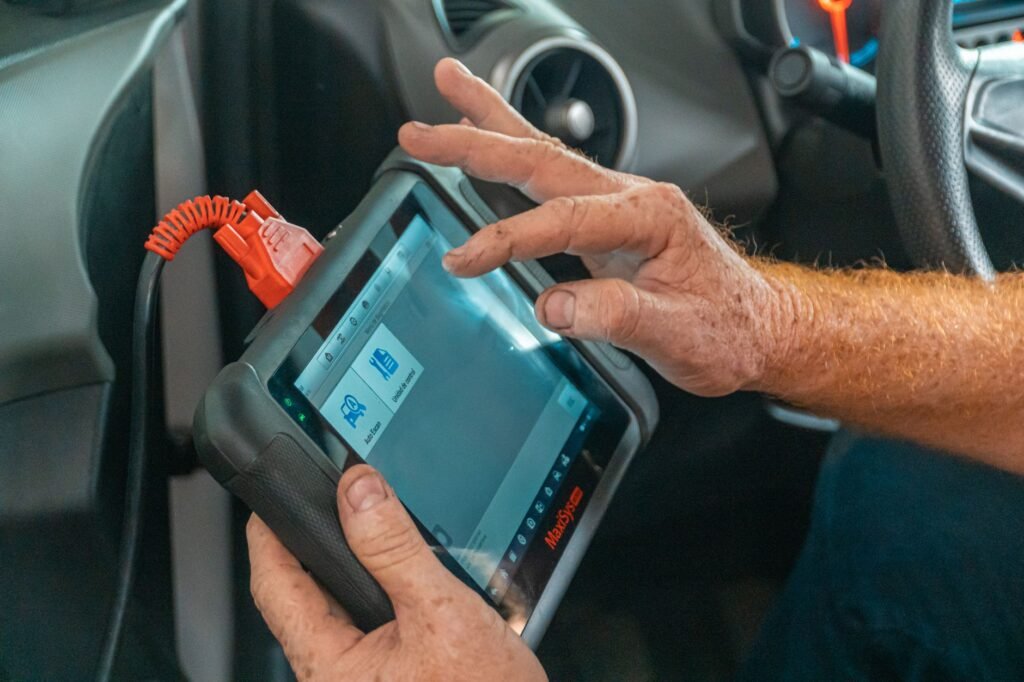
- The ECU itself. A diagnostic session reads the control unit’s hardware and software identifiers — the definitive answer, and the one the file is written against.
This is why we will not quote a gain over the phone from a registration and a model name. We can tell you what the work involves and what it costs to find out; the number comes after the read, not before it.
If you want the longer version of what that first session actually covers, we wrote it up separately in our guide to the diagnostic checks that come before any file is written.
What we look at before agreeing to write anything
A BlueHDi that has spent its life on short suburban runs around Willenhall, Walsall or Wolverhampton is a different proposition from one that commutes down the M6 every day. The checks are the same either way.
Stored and pending fault codes
Not just the ones lighting the dash. A pending code for a boost deviation or an injector correction is the car telling you something is already marginal, and more torque will find it.
DPF and SCR condition
Soot loading, differential pressure, regeneration history, AdBlue system health. A filter that is already struggling to complete a regeneration does not need a bigger fuelling demand on top.
Service history and oil
PSA diesels of this era are particular about low-SAPS oil to the manufacturer’s own specification, because the filter and the catalyst downstream depend on it. A car running the wrong oil has a housekeeping problem to fix first.
Clutch and gearbox
On a manual, the clutch is usually the first component to notice extra torque. That is a conversation to have before the file goes on, not a surprise afterwards.

Our honest position
Most BlueHDi remap pages lead with a power figure and a brand name. We lead with the engine code, because the figure is meaningless until you know which unit you are talking about — and because a shop willing to quote gains sight-unseen is telling you how it works.
What changes, and what stays exactly where it is
A remap on a BlueHDi is a software change to the engine calibration. The emissions hardware is not part of the deal, and that is not a stylistic preference on our part — it is the law.
The DPF stays. Since February 2014 the MOT exhaust inspection has included a check for the presence of a DPF, and a missing one where the vehicle was built with it is an MOT failure. The same government guidance notes it is an offence under the Road Vehicles (Construction and Use) Regulations to modify a vehicle so it no longer meets the emissions standards it was designed to, with penalties of up to £1,000 for a car and £2,500 for a light goods vehicle.
The AdBlue and SCR system stays, and so does the EGR. On a Euro 6 PSA diesel these are not bolt-on extras; the calibration is written around them. If a workshop offers to make your BlueHDi “simpler” by deleting them, what they are offering is a road-illegal vehicle and an MOT problem. Our explanation of why cleaning a DPF is not the same conversation as removing one covers where that line sits.
What does change is the fuelling map, the boost targets and the torque limiters — within what the specific engine, turbo and transmission in front of us will take.
The paperwork nobody mentions until afterwards
Two separate questions get muddled here, so it is worth splitting them.
DVLA. A remap does not change what is recorded on your logbook. The changes DVLA requires you to put on a V5C are things like colour, engine, cylinder capacity, fuel type, seating capacity and the weight of a large vehicle — a software calibration is not on that list, because none of those recorded details has altered.
Your insurer. Entirely different. Insurers treat performance modifications as material facts whether or not the V5C moves, and a remap is a declarable modification on most policies. Declare it. The premium change is usually modest; an undeclared modification discovered at claim time is not.
If the car is still inside a manufacturer warranty, assume the dealer can see that the ECU has been written to, because they generally can.
Getting it done in the West Midlands
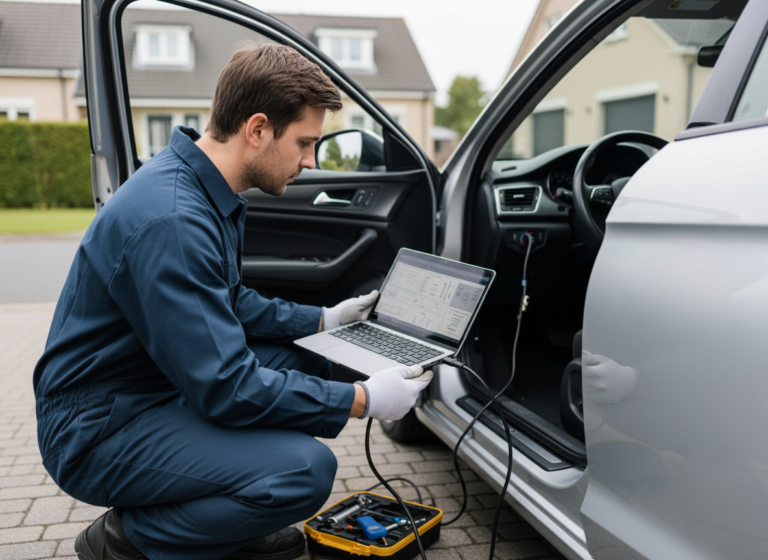
We work mobile. The car stays where it is — your driveway in Willenhall, a works car park in West Bromwich, a street in Wolverhampton or Walsall — and the diagnostic session and the file both happen there. For most BlueHDi models that is a single visit.
If you have not had ECU work done before and want to know what the visit actually looks like, our note on how to have the car ready for a mobile remap saves a wasted appointment. The full service detail sits on our Remapping services, and the wider picture of how our mobile ECU remapping service works across the region is worth ten minutes before you book anything with anybody.
Questions we get asked about BlueHDi remapping
Is BlueHDi the same as HDi?
No. HDi is the older PSA diesel name; BlueHDi is the Euro 6 generation that brought SCR and AdBlue to the group’s diesels. They are different emissions architectures, so they are different tuning jobs. If you are not certain which you have, the V5C and a diagnostic read will settle it in minutes.
How much power will my 1.6 BlueHDi gain?
We will not put a figure on that before reading the car, and we would be sceptical of anyone who does. The answer depends on the exact engine code, the turbo specification and the condition the engine is actually in. You get a realistic number after the diagnostic session, and you are free to walk away at that point.
Will a remap affect my AdBlue system?
It should not, because the SCR system stays fitted and functioning. What a remap can do is expose a system that was already deteriorating — a drifting NOx sensor or a partly crystallised injector. That is why AdBlue health is on the pre-remap check list rather than left to chance.
Does a remap invalidate my Peugeot or Citroën warranty?
A manufacturer is entitled to decline a warranty claim where a modification contributed to the failure, and dealer diagnostics can generally see that the ECU has been rewritten. It does not void the whole warranty automatically, but on a car still in its factory cover it is a risk you should weigh deliberately rather than discover later.
Mobile BlueHDi Diagnostics and Remapping Across the West Midlands
FM Auto Remapping covers Birmingham, Wolverhampton, Walsall, Solihull, Coventry, Dudley, West Bromwich, Willenhall and the surrounding areas. We read the car first, tell you what is actually in it, and let you decide from there.