 Skip to content
Remap Aftercare
After a Remap: The Servicing and Aftercare Your Engine Actually Needs
Most remap guides stop at the moment the file is written. That is the least interesting part. What decides whether a remap is still doing its job in three years is what happens over the following few thousand miles — oil, filters, and whether the diesel particulate filter is ever given the conditions it needs to clear itself.
The short answer
A remap does not change your service schedule, but it does raise the cost of ignoring it. Stick to the manufacturer’s oil grade and interval, or shorten the interval if you tow or do mostly short journeys. Keep the DPF regenerating with regular longer runs. Treat any new fault code as something to investigate, not tolerate.
The First Few Hundred Miles
Nothing about a Stage 1 remap requires a running-in period in the mechanical sense. The engine has already covered its bedding-in miles. What the first few hundred miles are genuinely for is observation.
Drive the car normally. Use the full rev range at some point, but not on the first cold start of the day. What you are watching for is the boring stuff: no new warning lights, no unusual smoke on a hard pull, no hesitation as the turbo comes on boost, temperatures behaving as they always did.
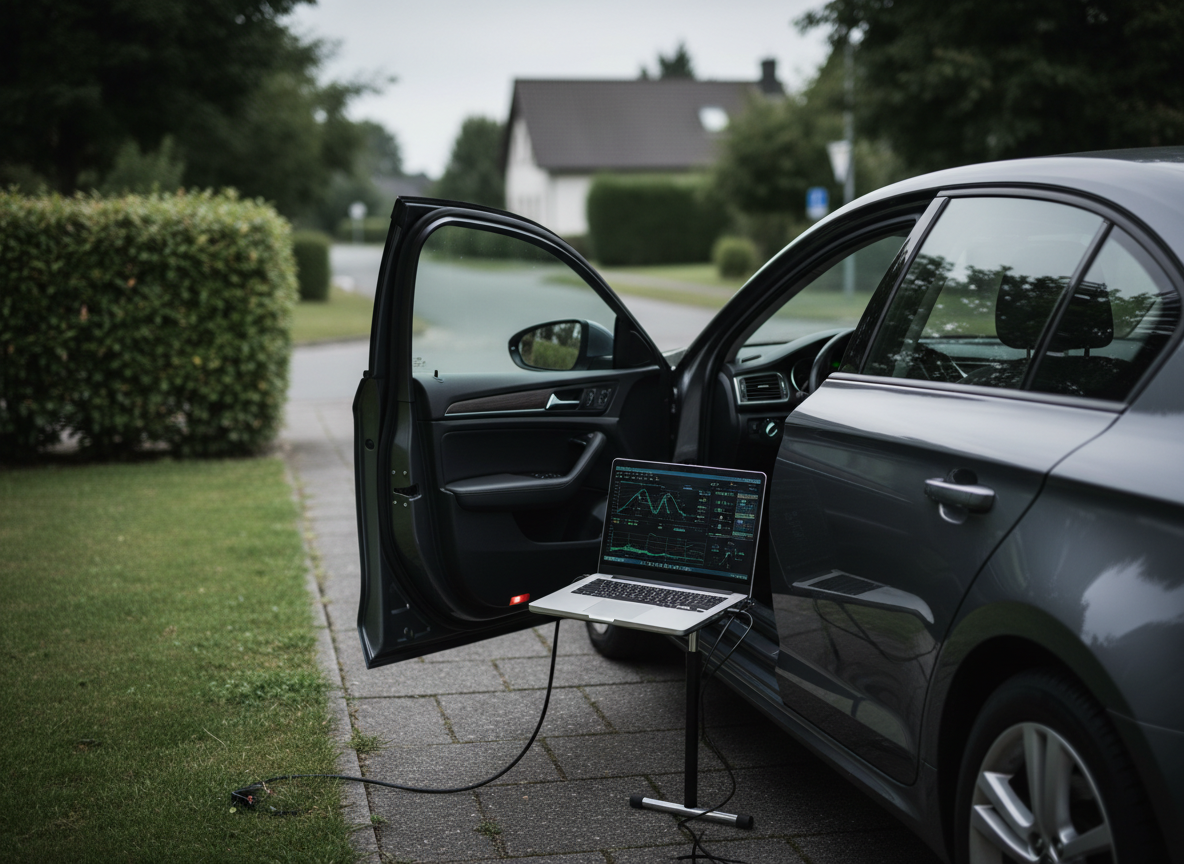
If something is not right, it almost always shows in this window rather than months later. That is why we keep the original file. A vehicle that behaves oddly after a map can be returned to its factory calibration in the time it takes to connect a laptop, which turns a worrying symptom into a straightforward diagnostic step rather than an argument.
If you notice the car feels flatter rather than stronger, that is a known and diagnosable situation rather than a mystery — we have written about poor acceleration after a remap and what usually causes it.
Oil and Servicing: Does a Remap Change the Interval?
The honest answer is that the manufacturer’s interval remains the correct baseline. A Stage 1 map does not create a new servicing requirement out of nothing.
What it does is reduce your margin for stretching that interval. A remapped engine sees higher peak cylinder pressures and higher peak turbo speeds than it did before. Oil is what protects the bearings and the turbo bearing housing under exactly those conditions, and oil that is two thousand miles past its interval protects less well than oil that is not.
What we suggest in practice
- Keep the manufacturer’s oil specification. Not a similar viscosity, the specification. On modern diesels the low-ash requirement exists to protect the DPF, and a non-compliant oil loads it with ash that never burns off.
- Use the interval, do not exceed it. If your car uses a variable service indicator, service when it asks rather than when it is convenient.
- Consider shortening it if you tow, do mostly short trips, or use the vehicle commercially. Those conditions were already hard on oil before the remap.
- Change the fuel filter on schedule. A restricted filter shows up as a fuelling shortfall, and on a remapped engine that shortfall is larger.
- Keep the air filter clean. The map assumes the airflow the sensor reports is real.
None of this is exotic. It is the maintenance the vehicle already needed, done on time rather than eventually.
Looking After the DPF
This is where most remapped diesels actually get into trouble, and it has less to do with the map than with how the car is driven.
A diesel particulate filter traps soot and then burns it off in a process called regeneration. That process needs sustained exhaust temperature, which in practice means a sustained run rather than a series of short journeys. DVSA’s guidance is direct about what happens when it does not get one: regeneration, if not carried out properly, can lead to a build up of soot which can affect performance and ultimately lead to expensive repair costs.

The practical version is a twenty to thirty minute run at steady speed in a lower gear than you would normally use, roughly once a fortnight, on a car that otherwise does school runs and supermarket trips. If a regeneration starts and you switch the engine off partway through, the cycle is abandoned and the soot stays. Repeat that often enough and the filter reaches a load level it can no longer clear on its own.
If the DPF light has appeared and gone away and appeared again, that pattern is worth understanding rather than ignoring — we have covered why the diesel warning light keeps coming back in detail.
Your MOT Is the Real Audit
A remap does not appear on an MOT certificate. There is no test for calibration. What the MOT does test is the consequences, and the rules leave very little room.
Since May 2018, a diesel car with a particulate filter picks up a major fault — a failure — if the tester can see smoke of any colour coming from the exhaust, or finds evidence that the DPF has been tampered with. A well-calibrated map on a healthy engine produces neither. A map applied over an existing fault, or a car that has been quietly over-fuelling for a year, can produce the first.
The tampering point deserves emphasis because owners are sometimes offered a filter removal as a cheap solution to a blockage. DVSA states that removing a DPF will almost invariably breach the Road Vehicles (Construction and Use) Regulations, making the vehicle illegal for road use, with penalties of up to £1,000 for a car or £2,500 for a light goods vehicle. It is not a repair, and it is not something we will do on a road-going vehicle.
Remap Aftercare: Warning Signs Worth Acting On
A remapped engine should feel consistent. When it stops feeling consistent, something has changed, and the earlier that is investigated the cheaper it usually is.
- Power that comes and goes. Usually a sensor drifting rather than the map, but it needs reading to know.
- The engine management light, at all. On a remapped car this is not something to watch for a few weeks.
- Visible smoke under load. Investigate before your next MOT, not after it.
- The DPF light appearing more often than it used to. Soot loading is climbing faster than it is clearing.
- New noises from the turbo. Whine or flutter that was not there before is worth a look.
- Reduced power mode. The ECU has decided something is out of range and is protecting the engine.
None of these mean the remap was wrong. They mean the vehicle is telling you something, and a remapped engine is no different from a standard one in deserving an answer.
Keep the Original File
Every vehicle we map has its factory calibration read out and stored before anything is written. That backup matters more than people expect.
It matters if the car goes back to a franchised dealer for warranty work. It matters if you sell the vehicle and the buyer would prefer it standard. It matters if a fault needs diagnosing and you want to eliminate the map as a variable. And it matters if you simply change your mind.
Restoring it is a short job. If you are curious about how the whole process runs from arrival to handover, our guide to what to expect on a mobile remap day walks through it.
One more piece of admin that is easy to leave undone: tell your insurer. A remap changes engine output and is a modification, and an undeclared modification is the kind of thing that surfaces at claim stage rather than before it. Declare it, get the acceptance in writing, and file it with your policy documents.
Had a Remap Elsewhere and Not Sure It Is Healthy?
We can read the ECU, check live data for boost, fuelling and DPF soot loading, and tell you where the vehicle actually stands — at your home or workplace, across the West Midlands.
Remap Aftercare FAQ
Do you need an oil change straight after a remap?
Not as a rule. If the oil is fresh and within its interval, a remap does not invalidate it. If the car is close to its service, bringing it forward is sensible — you are about to ask more of the oil than you were before. What matters more than the timing is using the manufacturer’s specification, particularly the low-ash requirement on cars with a DPF.
How long does a remap last?
Indefinitely. The file is written into the ECU and stays there. It does not fade, wear out or need refreshing. The two things that remove it are a dealer software update, which can overwrite the calibration, and a deliberate restore from the original backup.
Will a service or software update wipe the remap?
A routine service will not. A manufacturer software update can, because it rewrites the ECU with the factory file. If a dealer proposes an ECU update, expect the map to be gone afterwards and plan for it to be reapplied.
Can a dealer tell my car has been remapped?
Often, yes. Diagnostic equipment can compare the calibration checksum in the ECU against the expected factory value, and a mismatch indicates the software has been changed. Assume a franchised dealer can see it and be straightforward about it, particularly if the vehicle is still under warranty.
