 Skip to content
Car Modifications West Midlands · Rules & Reality
Car Modifications in the West Midlands: What You Must Declare, What Fails an MOT, and What Actually Adds Power
Published by FM Auto Remapping — last updated
Most guides to car modifications open with alloy wheels. The rulebook does not. DVLA’s list of changes you must record on your V5C runs to seven items — colour, engine, cylinder capacity, fuel type, seating capacity, weight, and the chassis or bodyshell. Wheels are not on it. Neither is an ECU remap.
That single fact trips up more drivers across Birmingham, Walsall and Wolverhampton than any styling part ever has. Because “DVLA doesn’t need to know” gets heard as “nobody needs to know” — and those are two completely different statements.
Which car modifications do you have to declare?
In the UK you must tell DVLA about changes to your vehicle’s colour, engine, cylinder capacity, fuel type, seating capacity, weight or bodyshell. An ECU remap is not on that list. You should still declare it to your insurer, because insurers treat performance software as a modification even though the V5C does not.
Three separate rulebooks, not one
The confusion around car modifications in the West Midlands almost always comes from treating one question as three. There are three independent tests, and passing one tells you nothing about the other two.
1. Registration — does DVLA need updating?
This is the narrowest of the three. DVLA cares about whether the vehicle on the road still matches the vehicle on the record. Swap the engine, change the fuel type, respray it a different colour, and the paperwork must follow. Fit a bigger intercooler and it does not.
2. Roadworthiness — will it still pass an MOT?
The MOT does not ask whether a part is standard. It asks whether the vehicle meets the standard. A modified car with a well-fitted, appropriately quiet exhaust passes. A standard car with a rotten silencer fails.
3. Insurance — does your insurer know?
This is the widest net of the three and the one with the most expensive consequences. DVLA’s own guidance on making changes to a vehicle advises keepers to contact their insurance provider to check whether the changes affect cover. That advice sits alongside the registration rules for a reason: the two do not overlap neatly.
Modification by modification: who needs telling
Here is how the common West Midlands modifications actually sit against those three tests.
| Modification | Update V5C? | MOT risk | Tell insurer? |
|---|---|---|---|
| ECU remap (Stage 1) | No | Low, if emissions hardware is untouched | Yes |
| Engine swap or replacement | Yes — engine and cc | Depends on the unit fitted | Yes |
| Conversion to a different fuel | Yes — fuel type | Depends on installation | Yes |
| Cat-back exhaust | No | Yes, if unreasonably loud | Yes |
| Removing a cat or DPF | No entry exists | Fail | Yes — often refused |
| Wheels, suspension, styling | No | Condition-dependent | Yes |
| Full colour change or wrap | Yes — colour | None | Yes |
Read down the right-hand column. Every single row says yes. That is the honest summary of UK modification rules: DVLA wants to know about a handful of changes, the MOT tester only cares about a handful more, and your insurer wants to know about all of them.
What the MOT actually checks on a modified car
Two sections of the DVSA inspection manual account for almost every modification-related failure we see on customer cars.
Noise
The manual is deliberately not a decibel table. A tester revs the engine to around 2,500rpm and uses judgement: exhaust noise must not be unreasonably above the level expected from a similar vehicle with a standard silencer in average condition. Excess noise is recorded as a Major defect, which is a fail.
In practice, a quality cat-back system on a road car rarely troubles this. A straight-through pipe with the baffles removed frequently does. There is no certificate you can produce that overrides the tester’s judgement.
Emissions hardware
This is the stricter one. On vehicles first used on or after 1 September 2002, manufacturer-fitted emission control equipment that is missing, obviously modified or obviously defective is a Major defect. Testers check what is visible and identifiable — catalytic converters, oxygen sensors, EGR valves.
Diesel particulate filters get their own rule. Since February 2014 a vehicle automatically fails the MOT if a DPF was fitted as standard and is no longer present, regardless of what the smoke meter says. If your diesel is struggling with a blocked filter, the road-legal route is cleaning or replacement, not removal — we cover the difference in our guide to DPF cleaning versus DPF removal. Removal work is off-road and motorsport use only.
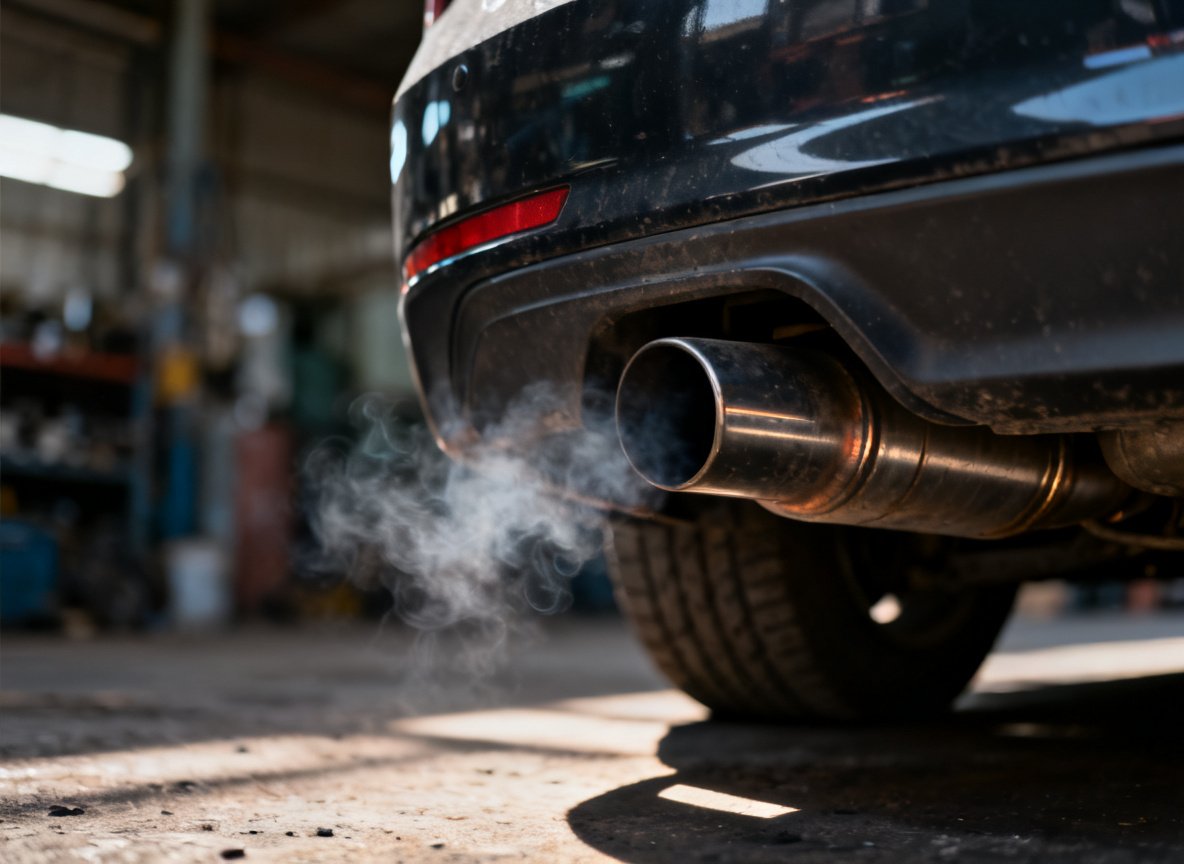
Which modifications actually add performance
Here is where our view differs from most modification guides, and we will state it plainly: on a modern turbocharged road car, software is the single largest performance change available per pound spent, and almost everything bolted to the outside of the car is not.
That is not a sales line, it is a consequence of how manufacturers build engines. A turbo engine leaves the factory with its boost, fuelling and timing capped well below the hardware’s limit, for reasons that have nothing to do with what the engine can take — emissions bands, model hierarchy, warranty exposure, fuel quality across export markets.
The changes that move the needle
- ECU remapping. Recalibrates boost, injection and torque limits within the existing hardware. On a healthy turbo diesel this is where the meaningful torque gain lives — see our Stage 1 and Stage 2 remapping service for what each stage involves.
- Gearbox software. On DSG and torque-converter automatics, shift points and clamping pressure are often the limiting factor rather than the engine.
- Fixing what is already wrong. A tired MAF sensor or a partially blocked intake will lose more power than most bolt-on parts will ever add back.
The changes that mostly do not
Induction kits, cat-back exhausts, lightweight wheels and styling parts change how a car sounds, looks and feels. On a turbocharged engine running a stock map, they rarely change what a rolling road records, because the ECU simply holds the same targets it was already holding. That is worth knowing before the money is spent, not after.
The one that costs people money
An undeclared modification does not usually cause a problem until a claim. At that point the insurer is assessing a vehicle that does not match the one it priced. Declaring a Stage 1 remap up front is typically a small premium adjustment; discovering it during a claim is a different conversation entirely. Our guide to remapping, insurance and warranty goes through what to say and when.

What we do — and what we do not
FM Auto Remapping is a software specialist. We work on the engine and gearbox control units: remapping, ECU diagnostics and repair, fault code work, and emissions system software. We are mobile across the West Midlands, so the work happens on your driveway or at your workplace.
We do not fit body kits, wheels, suspension or exhaust systems, and we will tell you when a job is a hardware problem rather than a software one. If a car arrives with a genuine mechanical fault, remapping it is the wrong answer — the fault comes first. Anyone who tells you otherwise is selling you a map, not a result.
Remapping itself is entirely legal on UK roads. We set out the detail in our explainer on whether a Stage 1 remap is illegal, which is one of the most common questions we get asked before booking.
Car modifications: frequently asked questions
Do I have to tell DVLA if I remap my car?
No. A remap changes engine software, not any of the details recorded on the V5C — colour, engine, cylinder capacity, fuel type, seating capacity, weight or bodyshell. There is nothing on the registration certificate for it to update. Your insurer is a separate question, and the answer there is yes.
Do I need to declare a remap on my insurance?
Yes. Insurers class performance software as a modification even though DVLA does not. Most treat a Stage 1 remap on a road car as a modest rating change rather than a refusal. The risk is not the premium, it is the position you are in at claim time if the modification was never disclosed.
Will a remap fail the MOT?
Not by itself. The MOT has no test for engine software. What it does test is emissions output and whether manufacturer-fitted emissions hardware is present and working. A Stage 1 remap on a car with its cat, DPF and sensors intact has nothing to fail on. A remap paired with removed emissions hardware is a different matter.
What car modifications are illegal in the UK?
Very few modifications are illegal in themselves. What makes a modified car unlawful to use on the road is failing a standard — an exhaust unreasonably louder than standard, or missing emissions equipment the vehicle was built with. That is why a removed DPF is a road-use problem while a remap is not.
Thinking about modifying your car in the West Midlands?
Talk to a specialist before you spend. FM Auto Remapping is a mobile ECU remapping and diagnostics service covering Birmingham, Wolverhampton, Walsall, Willenhall, Solihull, Coventry, Dudley and West Bromwich.
About the author
FM Auto Remapping is a West Midlands-based mobile ECU remapping and vehicle software specialist, working across diesel and petrol vehicles from Willenhall. All work is carried out on-site using industry-standard equipment. Regulatory points in this article are taken from current DVLA and DVSA guidance.
