Does premium fuel make a difference? It is one of the questions we get asked most often after a remap, and the honest answer is narrower than either the forecourt marketing or the forum arguments suggest. Here is what is actually in UK petrol and diesel, where the grade genuinely matters, and where it makes no measurable difference at all.
The short answer
Premium fuel makes a real difference in a narrow set of cases and very little in most. What matters far more is using the grade your engine was designed for. UK standard petrol is E10 and standard diesel is B7; the “super” grades change octane and the additive package, not the way your engine is calibrated.
What is actually in the fuel you are buying
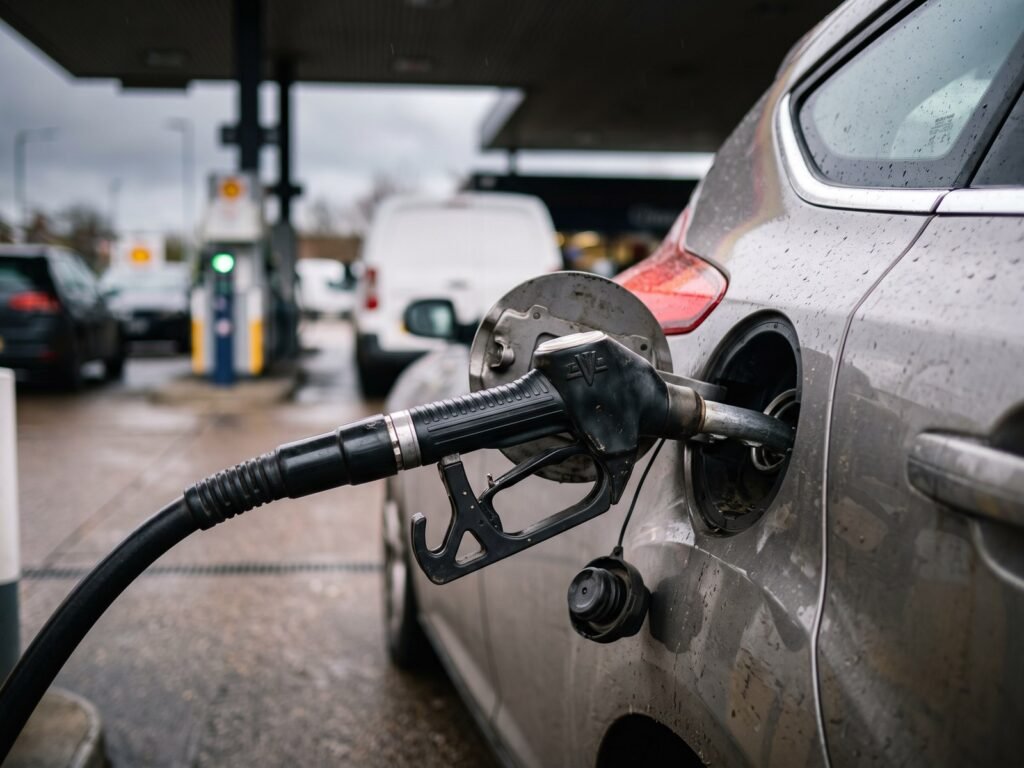
Most drivers have not looked closely at the labels on the pump, which is understandable, because the change happened quietly. Standard grade 95 octane petrol became E10 in Great Britain in September 2021 and in Northern Ireland in November 2022, and diesel fuel has not changed. E10 contains up to 10% renewable ethanol, where the older E5 standard contained up to 5%.
Diesel has its own label. Diesel containing up to 7% biodiesel is labelled B7, and those labels appear on pumps at every forecourt and on the filler caps of all new vehicles. If you have ever wondered what the square black label next to the nozzle means, that is it.
So the baseline for almost every driver in the West Midlands is E10 petrol or B7 diesel, whether they have thought about it or not.
Compatibility: the one case where the grade genuinely matters
This is where the answer stops being “it barely matters”. Around 95% of petrol vehicles on the road are compatible with E10 and every car built since 2011 is compatible, while drivers of incompatible vehicles can still buy E5 as the super grade at 97 octane or higher. The vehicles that are not compatible are mostly classics, cherished cars, some specific early-2000s models and certain mopeds.
If you own one of those, this is not a preference question. Ethanol is more aggressive towards some older fuel system materials, and running the wrong blend is a maintenance problem rather than a performance one. The government publishes a vehicle checker for exactly this purpose, and it takes under a minute.
For everyone else — which is nearly everyone — E10 is simply the fuel, and there is nothing to decide.
Fuel economy: the honest number
Here is the figure the forum arguments usually get wrong in both directions. Using E10 can slightly reduce fuel economy — around 1%, which is unlikely to be noticeable in everyday driving — and factors such as driving style, under-inflated tyres and a roof rack have a much more significant impact.
That is worth sitting with for a moment. The fuel blend change that generated years of argument is worth roughly one per cent. The roof box you left on after the summer holiday is worth considerably more than that, and so is the tyre pressure you have not checked since spring.
We see the same pattern in diagnostic work. When an owner tells us their economy has fallen off a cliff, the cause is almost never the fuel. It is a sticking EGR valve, a partially blocked DPF forcing repeated regeneration attempts, a failing sensor feeding the ECU bad data, or a driving pattern that has changed without the driver noticing. Our piece on the ECU remap fuel economy myth covers the tuning side of the same argument.
Octane, super unleaded and what higher grades actually do
Octane is a measure of a fuel’s resistance to detonating before the spark plug asks it to. It is not a measure of energy content, and it is not a measure of quality. A higher octane fuel does not contain more power waiting to be released.
What it does is give the engine more headroom against knock. On a modern petrol engine, the ECU listens for knock and pulls ignition timing back when it hears it. On a car whose calibration is written to take advantage of higher octane — and on some turbocharged petrol engines the manufacturer specifies it — the engine can hold more advance on super unleaded and will feel different for it.
On an engine calibrated for 95 octane, running 97 or 99 mostly buys you a margin you were never using. Not harmful, not helpful, just quieter insurance.
Diesel is a different story again, because compression ignition does not care about octane. Premium diesels are sold on cetane and on detergent packages. The realistic expectation there is cleanliness over time rather than a change you feel on the drive home — and on a vehicle already carrying injector deposits, fuel alone is not going to undo them.
Where fuel really shows up in our diagnostic work
Across the diagnostics we run in Birmingham, Wolverhampton and Walsall, fuel grade is rarely the headline. Fuel-related symptoms almost always trace back to one of these instead:
- Short-journey duty cycles. A diesel that never reaches temperature accumulates soot faster than it can burn it off.
- Injector condition. Worn or fouled injectors change spray pattern, and the symptoms look a lot like “bad fuel”.
- Sensor drift. A lazy MAF or a failing lambda sensor makes the ECU fuel wrongly, and the driver blames the pump they last used.
- Filters and servicing intervals. A fuel filter left well past its interval affects far more than a grade change ever will.
- Genuinely contaminated fuel. It happens, but it is rare, and it usually announces itself immediately rather than gradually.
If your diesel is smoking, the fuel is not usually the culprit — our guide to what causes black smoke from a diesel exhaust works through the realistic causes, and our diesel injector fault symptoms guide covers the one component owners most often mistake for a fuel problem.
Fuel and a remap: what changes and what does not
A remap is a calibration, and a calibration is written against assumptions — including the fuel the vehicle will actually run on. That has two practical consequences.
First, tell your tuner what you run. If a petrol calibration has been written expecting super unleaded and the car is then run on standard 95, the ECU will protect itself by pulling timing, and the result feels flat rather than dangerous. If it was written for 95, there is nothing to gain by upgrading afterwards.
Second, do not expect a fuel change to fix a driveability complaint after tuning. If a vehicle feels wrong after a remap, that is a calibration or a mechanical question, not a forecourt one. It gets diagnosed, not fuelled around.
For diesels — which is most of what we work on — the fuel question is close to a non-issue. Use B7 from a busy forecourt with good turnover, keep the filters to schedule, and put the money you would have spent on premium diesel towards the service that was due. Details of what the calibration work itself involves are on our Remapping services, and if soot is your actual problem, our DPF solutions are the more relevant starting point.
Our view: does premium fuel make a difference in practice?
Buy the grade your manufacturer specifies, buy it from a forecourt that sells a lot of it, and spend the difference on maintenance. The one exception is worth taking seriously: if your vehicle is not E10 compatible, check it and use E5 super. Everything else in this debate is worth roughly one per cent, and there are half a dozen things in your control that are worth considerably more.
Frequently Asked Questions
Is E10 petrol bad for my car?
For the overwhelming majority of cars, no. Every car built since 2011 is compatible, and around 95% of petrol vehicles on the road are. The exceptions are mostly classics, some early-2000s models and certain mopeds, and those owners can still buy E5 as the super grade. If you are unsure, use the government’s E10 vehicle checker.
Does super unleaded give you more power?
Only on an engine whose calibration can use the extra knock resistance, or where the manufacturer specifies a higher octane. Octane measures resistance to pre-ignition, not energy content. On an engine mapped for 95 octane, higher grades mostly buy headroom you were not using.
Is premium diesel worth paying extra for?
Diesel ignites by compression, so octane is irrelevant — premium diesels are sold on cetane and detergents. Any benefit is gradual cleanliness rather than a change you feel. It will not clear existing injector deposits, and it is not a substitute for a fuel filter that is overdue.
Should I switch to super unleaded after a remap?
Only if the calibration was written for it — ask whoever carried out the work. Running a lower octane than the map expects makes a petrol engine pull timing and feel flat. Running a higher octane than it expects usually changes nothing at all.
Can the wrong fuel grade damage a DPF?
Grade is rarely the cause. DPF loading is driven far more by journey length and temperature: a diesel doing repeated short, cold trips never gets hot enough to complete a regeneration. That pattern, not the pump, is what fills a filter.
Diesel and Petrol Diagnostics Across the West Midlands
If your economy has dropped or your engine feels flat, a diagnostic read gives you a real answer instead of a forecourt guess. FM Auto Remapping covers Birmingham, Wolverhampton, Walsall, Solihull, Coventry, Dudley, West Bromwich, Willenhall and the surrounding areas, mobile to your location.