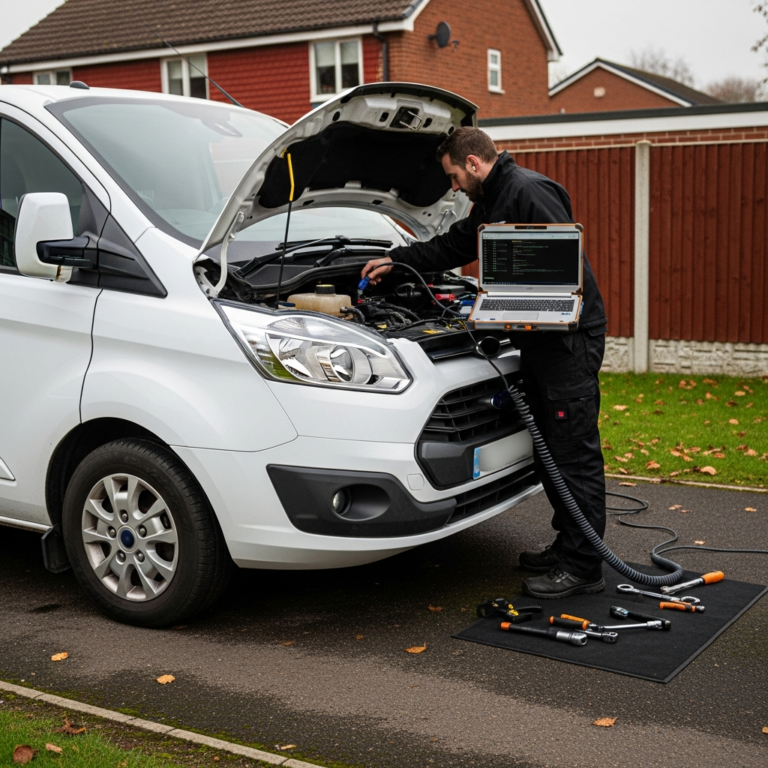
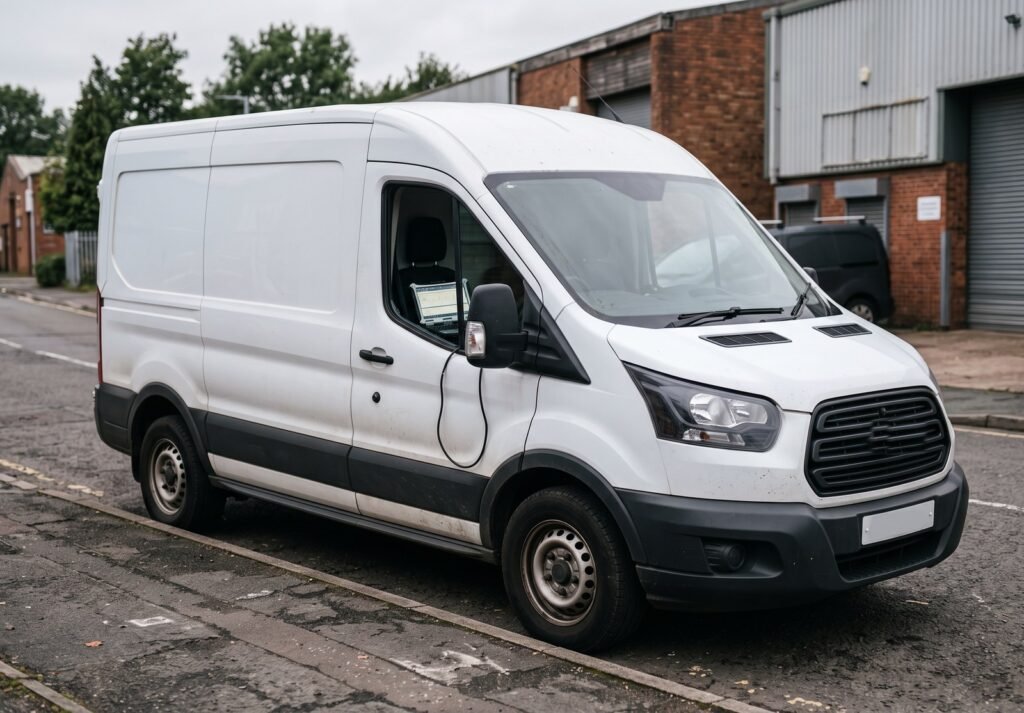
Almost every enquiry about van speed limiter removal in the West Midlands starts in the same place: a driver who has found the van will not go past a certain figure and assumes it is a software setting waiting to be switched off. Sometimes it is. Often it is a legal requirement with a seal on it. The difference is decided by one number on the vehicle’s plate, and it is worth knowing which side of it you are on before you ring anybody.
Can a van’s speed limiter be removed?
Speed limiter removal is only a software question on vans under 3.5 tonnes maximum laden weight. Above that figure a sealed, calibrated limiter is a legal requirement, and interfering with it is an offence. On lighter vans the restriction is a manufacturer or fleet setting instead — and the road speed limits for that vehicle still apply either way.
The 3.5 tonne line decides everything
There is a single statutory threshold underneath this whole subject, and it is not about engine size, age or body style. It is about plated weight. A speed limiter must be fitted on goods vehicles with a maximum laden weight of more than 3.5 tonnes, and on vehicles with more than eight passenger seats.
That sentence does most of the work. If your van is plated above 3.5 tonnes, the limiter on it is not an optional convenience feature. It is mandated equipment, it has a calibrated set speed, and it is sealed so that it cannot be quietly adjusted. Nothing an ECU specialist can offer changes that, and nobody reputable should pretend otherwise.
Below 3.5 tonnes, no such requirement applies. Any speed restriction on the vehicle got there because a manufacturer, a converter or a fleet operator chose to put it there — which is a very different conversation.
Check the plate, not the badge
This is where most people get caught out, and it catches trade buyers as often as private owners. The same model name frequently spans both sides of the 3.5 tonne line. A Mercedes-Benz Sprinter, Iveco Daily, Renault Master, Vauxhall Movano, Peugeot Boxer, Citroën Relay, Fiat Ducato, VW Crafter or MAN TGE can be specified as a 3.5 tonne van or as a heavier chassis cab or box variant with a plated weight well above it.
Two vans on the same forecourt, with the same badge on the back, can therefore sit under completely different legal regimes. The badge tells you nothing. The manufacturer’s plate — usually on the door pillar, under the bonnet or inside the passenger door aperture — carries the maximum laden weight, and that is the figure that matters.
Smaller vans such as the Ford Transit Custom, VW Transporter, Vauxhall Vivaro, Peugeot Expert, Citroën Dispatch, Toyota Proace, Renault Trafic, Nissan Primastar and Ford Transit Connect sit comfortably under the threshold in every normal specification. The large-van ranges are the ones to check properly.
Above 3.5 tonnes it is not an ECU job at all
Where a limiter is a legal requirement, it is treated as a regulated device rather than a calibration setting. It has to be set correctly, sealed against interference and kept in working order — and there is a dedicated testing network behind it. DVSA maintains a list of approved speed limiter centres where a limiter is tested or repaired, in the same way approved tachograph centres exist for tachographs.
So if a heavier van’s limiter is behaving oddly, cutting in early, or has thrown a fault, the answer is a limiter centre, not a remapping van. We will tell you that on the phone rather than book you in, and we would rather lose the job than take one we should not be doing.
It is also worth saying plainly: an operator caught running a heavier goods vehicle with a defeated limiter is not looking at a parking ticket. It bears on roadworthiness, on the operator’s licence where one is held, and on the employer’s position if a driver is hurt.
What is actually restricting a van under 3.5 tonnes
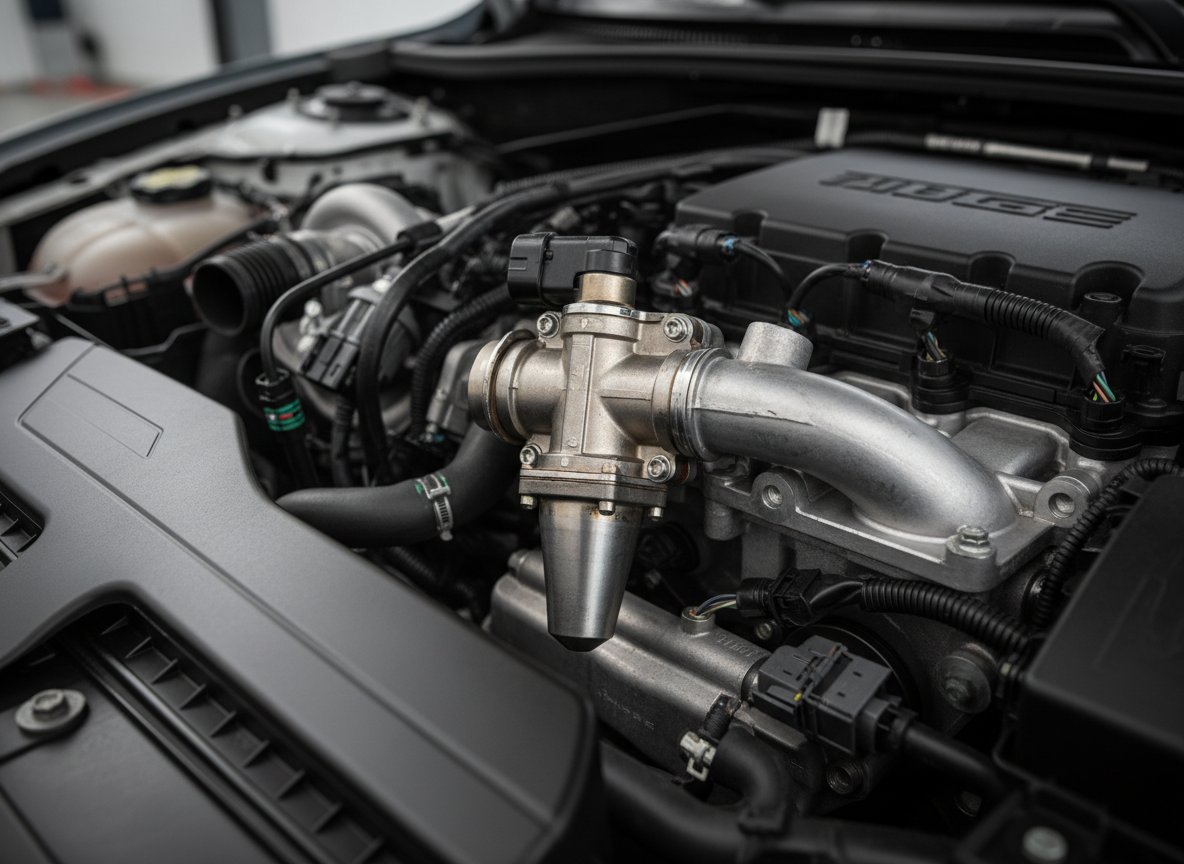
On a lighter van, a speed restriction almost always comes from one of three places, and identifying which one you have is the first job of any diagnostic visit.
- A manufacturer calibration. A figure written into the engine ECU at build, varying by model, engine, market and sometimes by the body or tyre specification the van left the factory with.
- A fleet or lease specification. Large buyers routinely order vans with a lower restriction set as a condition of the contract. Second and third owners inherit it without ever being told, which is why the figure on a used ex-fleet van so often surprises people.
- A telematics or aftermarket device. Not a calibration at all — a separate box, often tied to a tracking or driver-behaviour system. Nothing in the engine ECU will alter it, and unplugging somebody else’s telematics unit is its own problem.
Only the first two are software. A diagnostic read tells us which of the three is in front of us before anybody quotes for anything, and on a used ex-fleet van the answer is genuinely unpredictable until we look.
Raising a restriction does not raise your speed limit
This is the part that gets skipped in most write-ups on the subject, and it is the part most likely to cost a driver their licence. Vans are goods vehicles, and goods vehicles have their own national speed limits that are lower than a car’s on two road types out of three. Goods vehicles of not more than 7.5 tonnes maximum laden weight are limited to 50 mph on single carriageways and 60 mph on dual carriageways, with 70 mph on motorways.
| Road type | Car | Most vans (goods vehicle up to 7.5t) |
|---|---|---|
| Single carriageway | 60 mph | 50 mph |
| Dual carriageway | 70 mph | 60 mph |
| Motorway | 70 mph | 70 mph |
There is one common exception. Vehicles weighing no more than 2 tonnes laden may qualify as a car-derived van, and those follow car limits instead. A small car-based van may well qualify; a full-size panel van will not.
In other words, a van that has been electronically freed to run faster is still a vehicle that is not allowed to run faster on most of the roads it uses. That is a real and frequently expensive gap between what the vehicle will do and what the driver is permitted to do.
Our position, stated plainly
Here is what most guides on this topic will not say. For the great majority of drivers who contact us about a restriction, raising it is not the change that improves their week. A van that pulls poorly when loaded, hunts between gears on a gradient or feels flat from low revs has a calibration problem, and that is a different and far more useful piece of work than shifting a top-end number the driver is not legally allowed to use anyway.
So the honest answer is usually: let us read the vehicle first. If the restriction is a legacy fleet setting on a van you now own outright, and the vehicle is under 3.5 tonnes, that is a straightforward and legitimate software change. If the van is plated above 3.5 tonnes, the answer is no, and we will point you at an approved limiter centre. If the real complaint is how the van drives under load, we will say so, because that is the job worth doing.
If drivability under load is the actual issue, the Remapping services is the right starting point, and our guide to van and commercial vehicle remapping covers what changes on a working vehicle in more detail.
Insurance, leases and who actually owns the decision
Three practical checks before anything is booked, and they matter more on a commercial vehicle than on a private car.
The van has to be yours to modify. Leased, contract-hired and finance-agreement vehicles are usually subject to terms that prohibit ECU changes, and a fleet-set restriction is very often a contractual requirement rather than a preference. Removing it can breach the agreement even where nothing illegal has happened.
Your insurer has to know. An undeclared ECU modification is a live problem at claim time on any vehicle, and our note on remapping, insurance and warranty in the UK goes through how to declare it properly. A two-minute phone call protects a five-figure claim.
If drivers are employed, the duty of care sits with the business. A restriction set by an operator is frequently a safety policy, not an inconvenience. Lifting it without a documented decision moves the risk onto the person who authorised it.
On cost, we do not publish a fixed figure for this work, because the honest number depends entirely on what the diagnostic read finds — the ECU type, whether the restriction is a calibration or a separate device, and how the ECU is accessed. We will give you a price after the read and before any work starts, and anything we quote before that would be a guess rather than a quote.
Frequently Asked Questions
Is it illegal to remove a speed limiter from a van?
It depends entirely on the plated weight. On a goods vehicle over 3.5 tonnes maximum laden weight the limiter is legally required equipment and is sealed against interference, so defeating it is an offence. On a van under 3.5 tonnes there is no legal requirement for a limiter, so altering a manufacturer or fleet restriction is not in itself unlawful — though the vehicle’s speed limits, your insurer and any lease terms all still apply.
Do all vans have a speed limiter?
No. Vans over 3.5 tonnes must have one. Below that, most have some form of electronic restriction, but it varies enormously — some are manufacturer settings, some were specified by a fleet buyer, and some come from a separate telematics box that has nothing to do with the engine ECU. The only way to know which you have is a diagnostic read.
How do I find out what my van is restricted to?
Not from the handbook, usually. Handbooks rarely state a figure because it varies by specification, and an ex-fleet van may carry a setting the manufacturer never applied. A diagnostic session reads what is actually written to the vehicle in front of you, which is the only figure worth working from.
Will a change to the restriction show up at MOT?
A car or light van MOT does not test for a manufacturer speed restriction, so it is not a pass or fail item. That is not the same as saying it is invisible — a dealer diagnostic session, a lease return inspection or a fleet audit can all see that the ECU has been written to.
Can you do this on a company or leased van?
Not without written authority from whoever owns the vehicle. We ask about ownership before booking, and on a leased or contract-hired van we will want confirmation from the leasing company or the fleet manager rather than the driver. It protects you as much as it protects us.
Van and Commercial ECU Work Across the West Midlands
FM Auto Remapping covers Birmingham, Wolverhampton, Walsall, Solihull, Coventry, Dudley, West Bromwich, Willenhall and the surrounding areas. Mobile diagnostics and ECU work at your yard, your depot or your driveway — and a straight answer about what your van will and will not allow.