
The single most common request we get that has nothing to do with power is a start/stop disable. Usually the driver has pressed the same dashboard button every morning for two years and has had enough. Occasionally the system has started behaving oddly on its own, and that second case is the one worth slowing down over — because a start/stop system that has quietly given up is very often telling you something specific about the car, and switching it off in software silences the messenger.
What does a start/stop disable actually do?
A start/stop disable changes the system’s default state in the ECU, so the engine no longer shuts down at a standstill without the driver pressing the button on every journey. It removes no hardware, alters no emissions control equipment, and does not change the vehicle’s registered CO2 figure on its V5C.
The system is making a decision, not following a rule
It helps to understand what is actually happening before deciding whether to intervene. Automatic start/stop is not a simple switch that kills the engine whenever you stop. It is a continuous assessment, and the engine only shuts down when the car is satisfied it can restart cleanly and keep everything running while it is off.
As battery manufacturer VARTA describes it, the system only activates if specific conditions are met — such as the correct temperature, sufficient battery charge and full system readiness.
That is why the behaviour appears inconsistent to drivers. It will not stop the engine on a cold morning, or with the heated screen drawing hard, or when the climate control has work to do, or when the battery’s state of charge is below where the car wants it. None of those are faults. They are the system doing its job.
Why drivers actually ask for it
In practice the requests fall into three groups, and they deserve different answers.
1. Button fatigue
On most cars the off button is not remembered. It resets at every ignition cycle, so the driver has to press it again every single journey, which over a few years becomes genuinely irritating. This is the largest group by a distance, and it is a preference rather than a fault.
2. Worry about wear
Drivers reasonably assume that many more engine starts must mean more wear. Manufacturers anticipated that: cars with start/stop are built with an uprated starter, or a belt-driven starter-generator, plus the charging strategy and battery type to support it. The concern is understandable, but the components were selected for the duty.
3. The system has changed behaviour
This is the small group that matters. The car used to stop at every junction and now rarely does, or it stops and restarts immediately, or the light on the dash has started flashing. That is not a preference. That is a symptom, and disabling the system in software would hide it rather than fix it.
What most guides get wrong
Here is our view, and it costs us work to say it. If your start/stop has stopped working by itself, the odds are heavily that the battery is the reason — and turning the system off in the ECU does nothing for the underlying condition.
These cars do not use an ordinary battery. Conventional batteries cannot handle the workload of a start/stop system, which is why EFB and AGM types designed for frequent charge and discharge cycles are used instead. Those batteries are more expensive, and they are exactly what gets quietly substituted for a cheap flooded unit at the fourth or fifth owner.
Two things then happen. The substituted battery cannot cope with the cycling, so it degrades early. And on many vehicles the replacement was never registered to the battery management system, so the car keeps charging to a profile that does not match the battery it now has. The car responds by protecting itself: it stops shutting the engine down. Which is precisely the symptom the driver arrived with.
Left alone, that path usually ends in a no-start on a cold morning, months after the start/stop first went quiet. The system was the early warning. A software disable removes the warning and leaves the cause.
What a coding change changes — and what it does not
Assuming the car is healthy and the driver simply wants it off, it is worth being precise about the scope of the work.
What changes: the default state the system wakes up in. Instead of on-by-default with a button to switch it off, the car wakes with the function inactive. On most vehicles the button still works, so the driver can turn the system back on for a journey if they want to.
What does not change:
- No hardware is removed. The starter, the sensors and the charging system all stay exactly as they were.
- No emissions control equipment is touched. This is not an emissions modification and does not pretend to be one.
- The vehicle’s registered CO2 figure does not move. That number comes from type approval and sits on the V5C, so it still governs your vehicle tax band and any company car calculation.
- It does not repair a weak battery, an out-of-date battery registration, a failing sensor or a charging fault. If one of those is present, it is still present afterwards.
Anyone telling you a start/stop disable will transform economy or reliability is selling something. Its honest benefit is that the car behaves the way the driver wants without a button press, and that is a perfectly reasonable thing to want.
MOT, tax and insurance — the short version
Start/stop is not an MOT test item, and the dashboard warning lights the test does look at are a specific and fairly short list. The malfunction indicator lamps checked at MOT are those for air bags, seatbelt pretensioners and seatbelt load limiters, alongside the other listed items. A dormant start/stop function is not among them.
Vehicle tax is unaffected for the reason above: the CO2 figure that sets the band is the registered type-approval number, and no software change alters what is recorded against the vehicle.
Insurance is the one to take seriously. Any ECU change is a modification, and insurers expect to be told about modifications regardless of how minor they look to you. Our guide to remapping, insurance and warranty in the UK covers how to declare it without drama. A vehicle still inside its manufacturer warranty is a separate conversation, and one we would rather have before the work than after it.
When we would say no
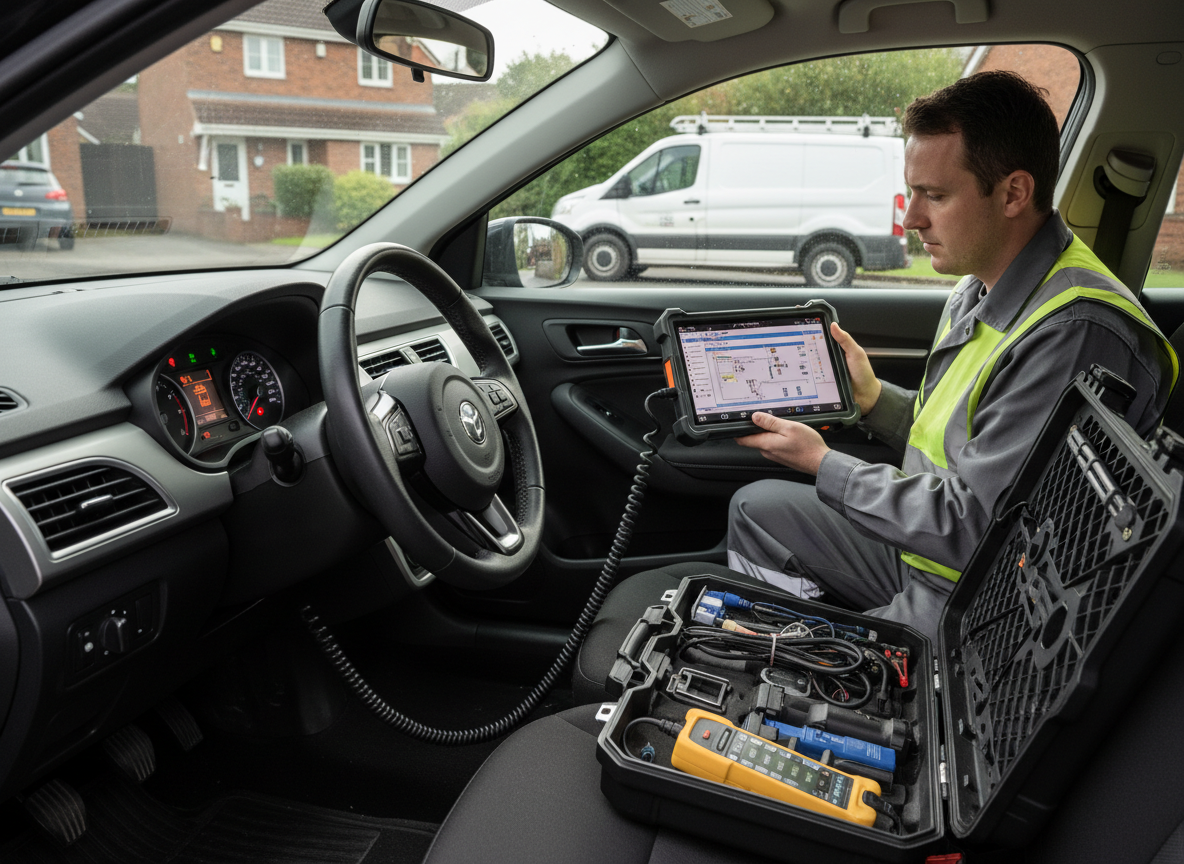
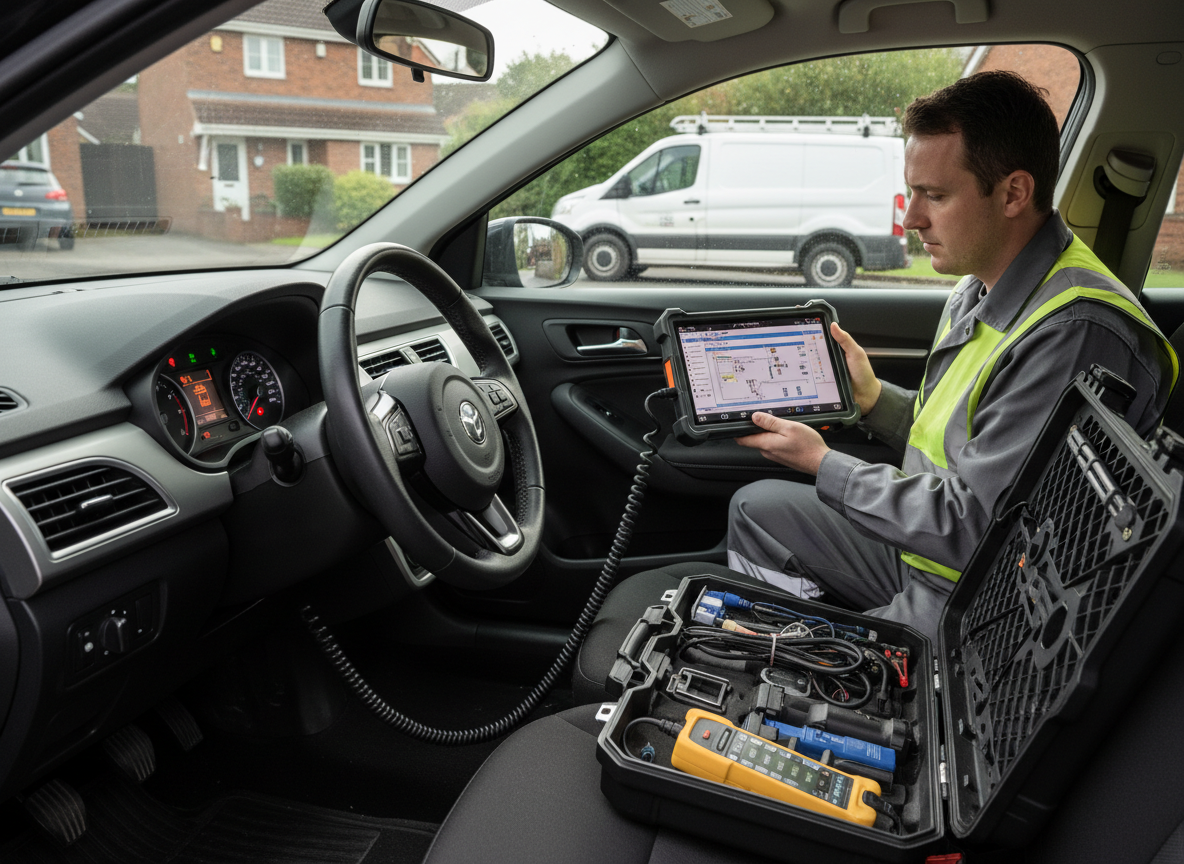
We will not do this work where the start/stop behaviour is itself the symptom. If a diagnostic read shows a battery in poor condition, a battery registration that does not match what is fitted, charging system faults or stored codes pointing at the relevant sensors, then disabling the function is the wrong job and we will say so.
In that situation the useful work is a proper read of the vehicle first. Our guides to common ECU faults and their symptoms and to what an engine management light is actually telling you cover the sort of thing that turns up when a car is read properly rather than guessed at.
Where the car is healthy and the request is simply a preference, it is a quick, clean and entirely reversible change, and we are happy to do it. Every job starts with the diagnostic read either way, and the read is what tells us which of those two situations we are in. If you want the wider picture on what can and cannot be altered in software on a modern ECU, the Remapping services page is the place to start.
Frequently Asked Questions
Why has my start/stop stopped working on its own?
Most often the battery. The system needs a certain state of charge and a healthy battery before it will shut the engine down, so a battery that is ageing, is the wrong type for a start/stop car, or was fitted without being registered to the vehicle will cause the function to drop out. Cold weather, a heavy electrical load and a short journey history all produce the same effect temporarily.
Is disabling start/stop bad for the engine?
No. The engine runs in exactly the mode it does whenever you press the off button, which is a manufacturer-supported state. What it does mean is more idling, so slightly more fuel used in traffic and no reduction in emissions while stationary — which is worth weighing if most of your driving is urban.
Can it be put back to standard later?
Yes. It is a coding change rather than a hardware one, so it can be reversed. That is worth knowing if you are planning to sell the car or return a lease vehicle, and it is why we keep a record of the original configuration.
Will it stop the warning light on my dashboard?
If the light relates to the start/stop system itself, disabling the function does not address why it appeared. If there is a stored fault, it needs reading and resolving on its own terms. We would rather find that at the diagnostic stage than have you pay for a change that leaves a light on.
Does it work on any car?
Not universally. It depends on the ECU, the manufacturer and the model year, and on some vehicles the option simply is not available in software. We check what is possible on your specific car during the read, before anything is quoted.
Mobile ECU Diagnostics and Software Work Across the West Midlands
FM Auto Remapping covers Birmingham, Wolverhampton, Walsall, Solihull, Coventry, Dudley, West Bromwich, Willenhall and the surrounding areas. We read the car first and tell you honestly whether the change you want is the change you need.