 Skip to content
O2 / Lambda Sensor Faults · Diagnostics · West Midlands
An oxygen sensor fault is one of the most common reasons a check engine light comes on. Left unaddressed, it can affect fuel economy, engine performance, and emissions — and in some cases lead to further damage to catalytic converters or other components.
This guide explains what oxygen sensors do, the symptoms of a fault, and what your options are if your vehicle is flagging an O2 sensor problem.
What Does an Oxygen Sensor Do?
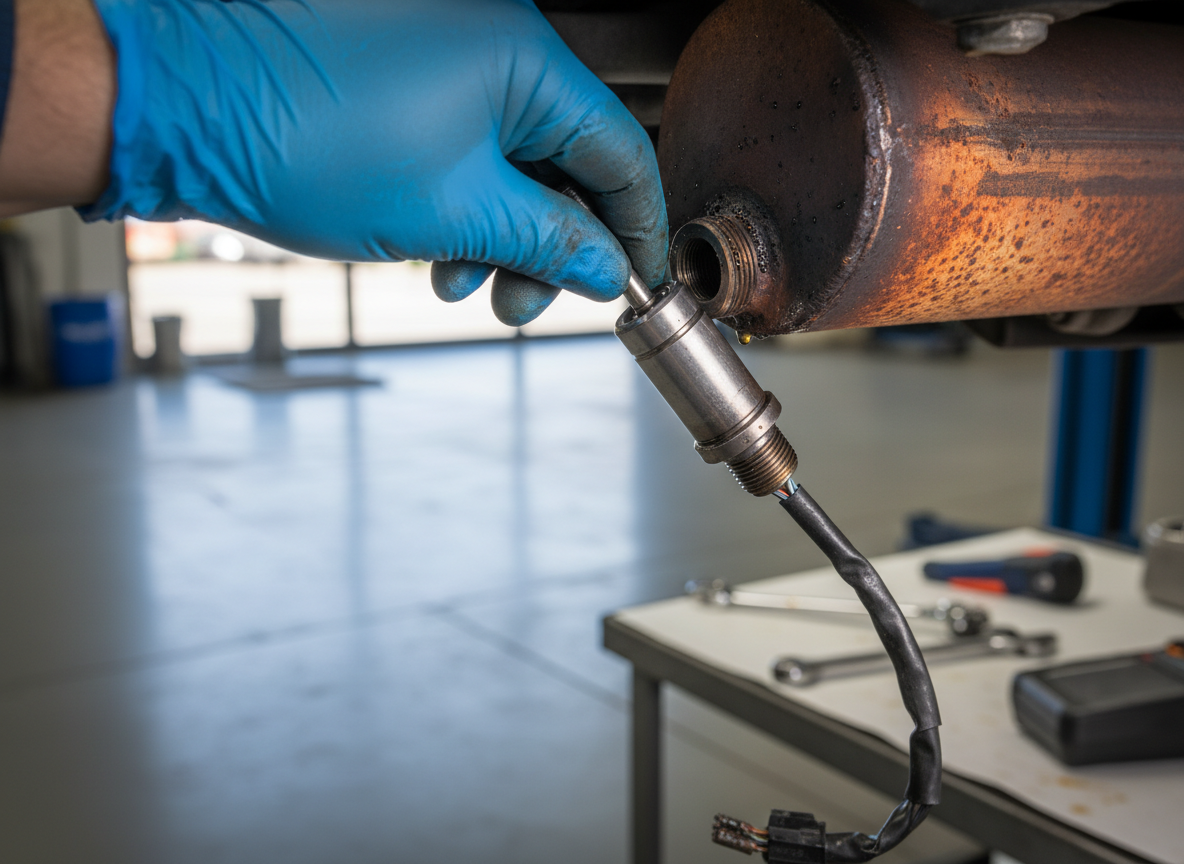
The oxygen sensor — also called a lambda sensor — monitors the level of oxygen in your vehicle’s exhaust gases. This information is fed back to the engine management system, which uses it to adjust the air-to-fuel ratio in real time. The goal is to maintain combustion that is as efficient and clean as possible.
Most vehicles have two or more oxygen sensors. The upstream sensor (before the catalytic converter) is primarily used to adjust the fuel mixture. The downstream sensor (after the catalytic converter) monitors the converter’s efficiency and checks that emissions remain within acceptable limits.
When either sensor fails or sends inaccurate readings, the engine management system can no longer accurately adjust fuelling — which leads to a range of noticeable symptoms.
Common Oxygen Sensor Fault Symptoms
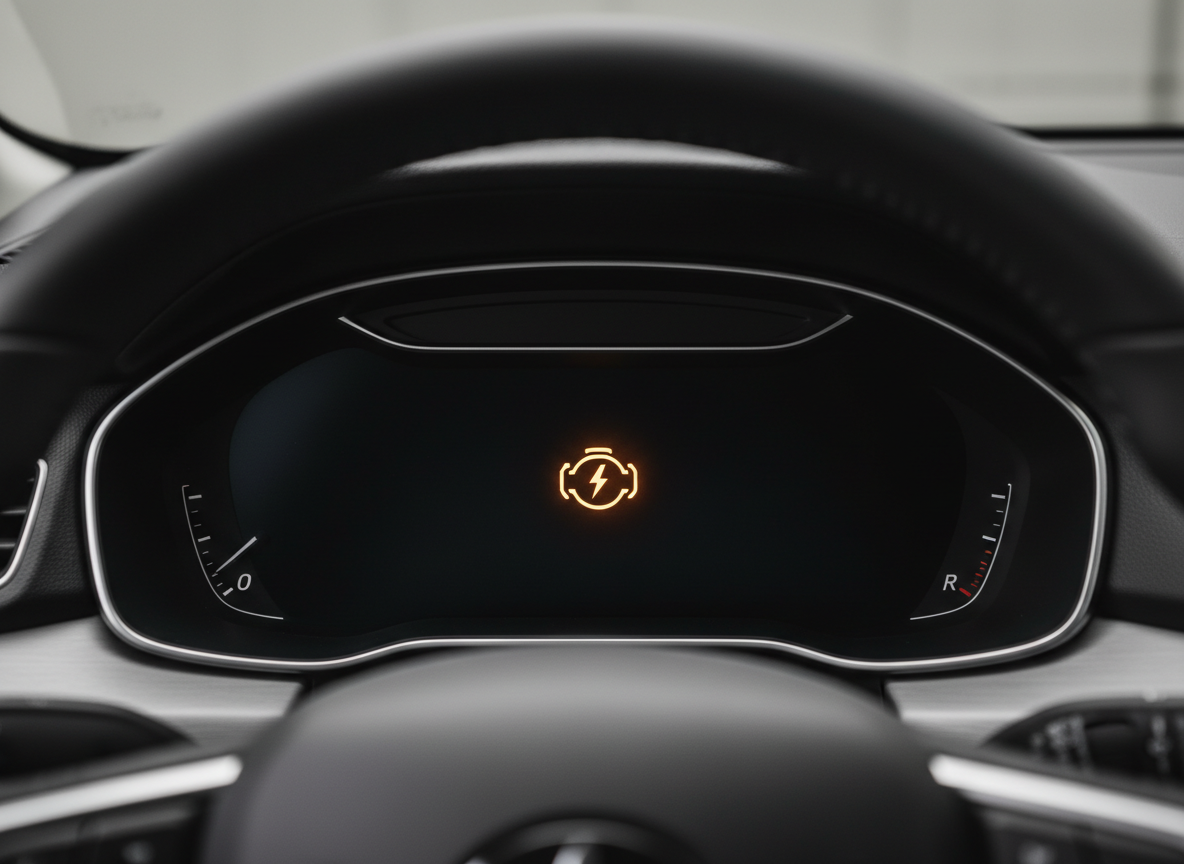
1. Check Engine or Engine Management Warning Light
This is the most common first sign. Fault codes associated with oxygen sensor faults typically fall in the P0130 to P0167 range. Without a diagnostic scan, it is impossible to know which sensor is involved or what the exact fault type is. If your engine management light is on, a diagnostic check is the correct first step.
2. Poor Fuel Economy
When an oxygen sensor fails, the engine management system may compensate by running a richer fuel mixture than necessary. This can cause noticeable fuel consumption increases. If you have noticed you are filling up more often without a clear reason, an O2 sensor fault is worth investigating.
3. Rough Idle or Engine Hesitation
A faulty oxygen sensor can cause the engine to idle roughly, surge at low speeds, or hesitate under acceleration. This happens because the ECU is receiving incorrect feedback and adjusting fuelling based on bad data. The result can feel like a misfire or general lack of smoothness at low revs.
4. Failed Emissions Test
If your vehicle fails its MOT on emissions, an oxygen sensor fault is a common contributing cause. With incorrect fuel mixture feedback, your vehicle may produce elevated levels of hydrocarbons or carbon monoxide — both tested during an emissions check.
5. Sulphur or Rotten Egg Smell from the Exhaust
A faulty oxygen sensor can allow the catalytic converter to overheat due to a consistently rich fuel mixture. This can produce a sulphur-like smell from the exhaust. If you notice this, it is worth acting quickly — a damaged catalytic converter is a more expensive repair than an oxygen sensor.
6. Black Smoke from the Exhaust
Consistently running rich due to incorrect sensor data can lead to visible black smoke from the exhaust, particularly under acceleration. This indicates unburnt fuel being expelled and should not be ignored.
O2 Sensor Faults on Diesel Vehicles
Diesel engines use oxygen sensors differently to petrol engines, and many modern diesels use them primarily to monitor catalytic converter and DPF performance. A faulty O2 sensor on a diesel can trigger warning lights related to both the engine management system and the DPF. If your diesel is flagging emissions-related faults, an oxygen or NOx sensor may be involved alongside — or instead of — the DPF itself.
Oxygen Sensor vs NOx Sensor: What Is the Difference?
On modern diesel vehicles, you may encounter both oxygen sensors and NOx (nitrogen oxide) sensors. They serve related but distinct purposes:
- Oxygen sensors measure exhaust oxygen content to regulate the air-fuel ratio
- NOx sensors measure nitrogen oxide levels to control the AdBlue injection system and EGR function
- Both can trigger the engine management light and affect emissions performance
- Both can cause reduced power, rough running, or AdBlue-related warnings if they fail
FM Auto Remapping provides AdBlue, NOx and O2 solutions across the West Midlands. If you are not sure which sensor is causing the problem, we can diagnose the specific fault code and advise accordingly.
What Causes Oxygen Sensor Faults?
O2 sensors can fail for a number of reasons, including:
- Age and general wear — most sensors last between 60,000 and 100,000 miles on standard vehicles
- Contamination from oil or coolant entering the exhaust system
- Physical damage to the sensor or its wiring
- Carbon build-up on the sensor element, particularly on high-mileage engines
- Damage caused by running a consistently rich fuel mixture over time
- The wrong sensor type being fitted during a previous repair
It is also worth noting that not every O2 sensor fault code means the sensor itself has failed. In some cases, the underlying issue is a vacuum leak, a fuelling problem, or an engine management software issue that needs to be addressed separately.
Can You Drive With a Faulty Oxygen Sensor?
In many cases yes — but it is not advisable to leave it unaddressed for long. A faulty O2 sensor that causes the engine to run rich can accelerate wear on the catalytic converter, which is a significantly more expensive repair. It will also affect fuel economy and emissions, and may eventually cause further faults.
If your vehicle is in limp mode or experiencing severe symptoms such as misfiring or heavy smoke, it should not be driven until the fault is investigated.
How FM Auto Diagnoses O2 Sensor Faults
Our diagnostic process involves connecting specialist equipment to your vehicle’s OBD port to read fault codes and live sensor data. Rather than simply clearing the code and hoping, we look at the live data stream from the sensor — how it responds under different conditions — to determine whether the sensor itself is faulty or whether there is an upstream cause.
Once the fault is confirmed, we will advise on the appropriate repair. In some cases this is a straightforward sensor replacement. In others, particularly on vehicles with underlying fuelling or emissions issues, additional work may be needed first.
We operate a fully mobile service across the West Midlands, including Coventry, Birmingham, Wolverhampton, Walsall, Dudley, and Willenhall. We come to your location — no need to arrange a tow or book into a workshop.
Frequently Asked Questions
What fault codes are associated with oxygen sensor faults?
Common codes include P0130 to P0167 (upstream O2 sensor circuit faults) and P0136 to P0167 (downstream sensor faults). P0420 and P0430 relate to catalyst efficiency and are often linked to O2 sensor performance. The specific code determines which sensor and what type of fault is involved.
Will clearing the fault code fix the problem?
No — clearing the code removes the warning light temporarily but does not fix the underlying issue. In most cases, the fault will return within a short time of driving if the root cause has not been addressed.
How long does an oxygen sensor last?
On most modern vehicles, O2 sensors can last between 60,000 and 100,000 miles. Higher-mileage vehicles, those with oil consumption issues, or vehicles that have previously run rich fuel mixtures may see sensor degradation earlier.
Can an oxygen sensor fault affect my MOT?
Yes — if the fault causes elevated emissions or if the check engine light is on during the test, this can result in an MOT failure. Resolving the fault before your MOT is advisable if the light is already on.
Do you cover O2 and NOx sensor faults on diesels?
Yes — we cover oxygen sensor and NOx sensor diagnostics and solutions on both petrol and diesel vehicles. Our AdBlue, NOx and O2 solutions service covers the full range of emissions-related sensor faults across the West Midlands.
Oxygen Sensor Fault? Get a Mobile Diagnostic
FM Auto Remapping provides mobile diagnostics and O2 sensor fault resolution across the West Midlands. We will identify the exact fault and advise on the right fix.
Related Services
We also cover EGR solutions, DPF solutions, DTC fault code removal, and ECU remapping across Coventry, Birmingham, Wolverhampton, Dudley, and the wider West Midlands.
