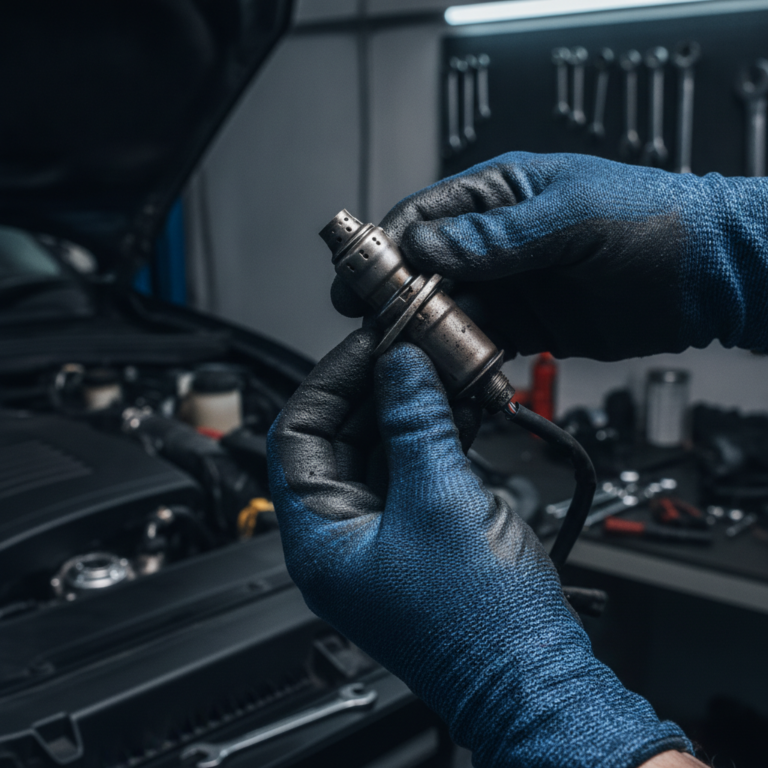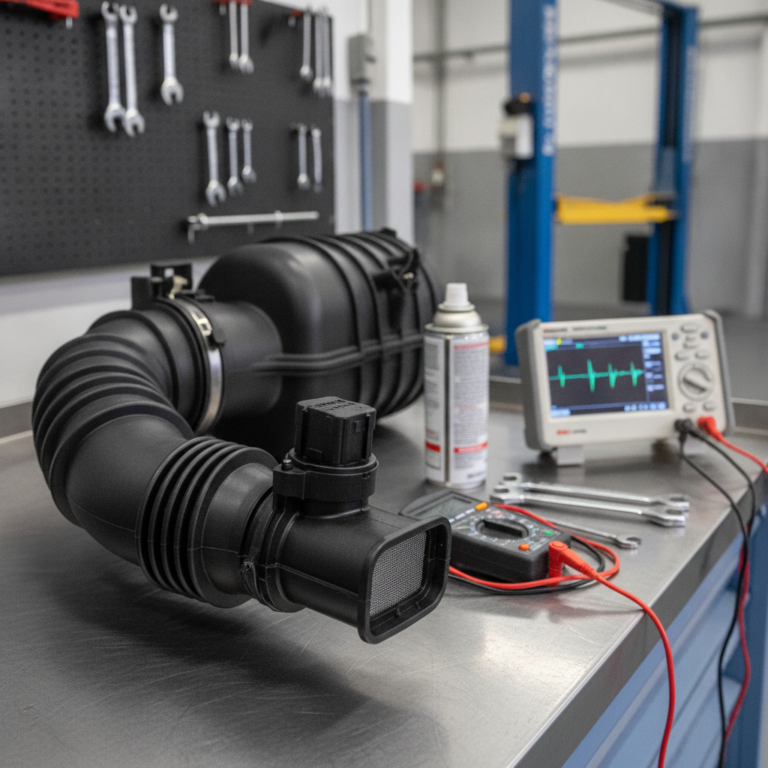

BMW swirl flap problems are one of the few diesel intake faults owners worry about more than mechanics do — and one of the few that do not appear anywhere on the DVSA’s list of emission control equipment a tester has to inspect. That gap between reputation and regulation is where most of the confusion lives, so this guide separates the two.
The short answer
Swirl flaps are small vanes in the intake manifold of many BMW diesels that alter air movement at low engine speeds. When the linkage, spindle or actuator wears, the usual result is an engine management light, a stored intake fault, rough running at idle and a flat spot low down. It is a mechanical fault, not a software one.
What swirl flaps are actually doing
Each intake port on the affected engines has a flap that partially closes at low load. Restricting one side of the port speeds the incoming air up and makes it swirl as it enters the cylinder, which improves mixing when there is not much airflow to work with. As revs and load rise the flaps open and get out of the way.
The engines usually discussed are the four and six-cylinder BMW diesels of the 2000s and early 2010s — the M47 and M57 families, and the N47 and N57 that followed them. Design details changed over the years, including the flap material and the way the linkage is driven, which is why two owners can have completely different experiences of the same nominal component.
The important point is where they sit. Swirl flaps are on the air side, upstream of the cylinder. They are not part of the exhaust after-treatment system.
BMW swirl flap problems: symptoms worth taking seriously
Swirl flap wear rarely announces itself dramatically. It tends to arrive as a set of small annoyances that owners live with for months.
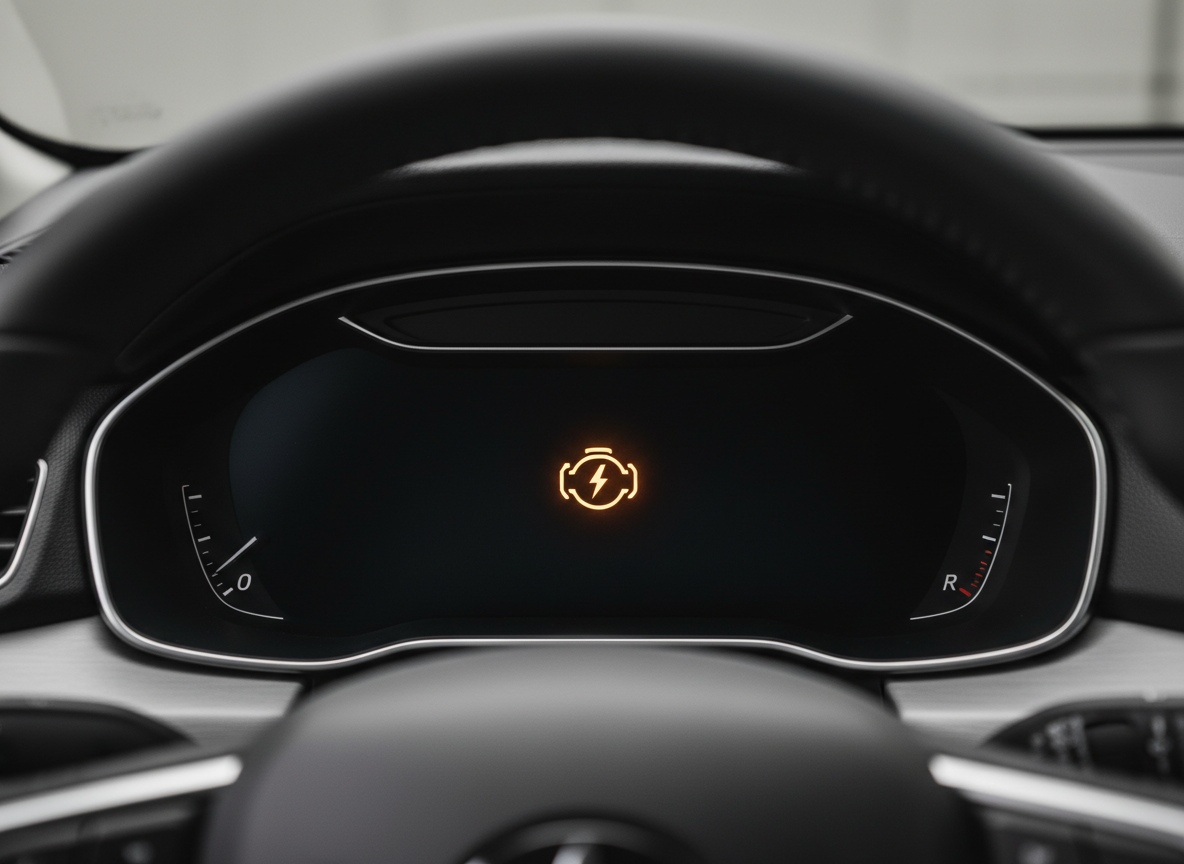
- Engine management light on, with a stored intake or actuator fault
- Lumpy or hunting idle, particularly from cold
- A flat spot below about 2,000rpm that clears once the car is pulling
- A faint rattle or clatter from the intake side at idle
- Slightly heavier fuel consumption on short, low-load journeys
- Occasional reduced power events with no obvious trigger
Every one of those symptoms has other candidate causes. A tired exhaust gas recirculation valve produces a strikingly similar picture, and so does a boost leak. That overlap is the reason a fault code on its own is not a diagnosis — our guide to EGR faults and how they present is worth reading alongside this one if you are trying to tell them apart.
The risk everyone has heard about, stated honestly
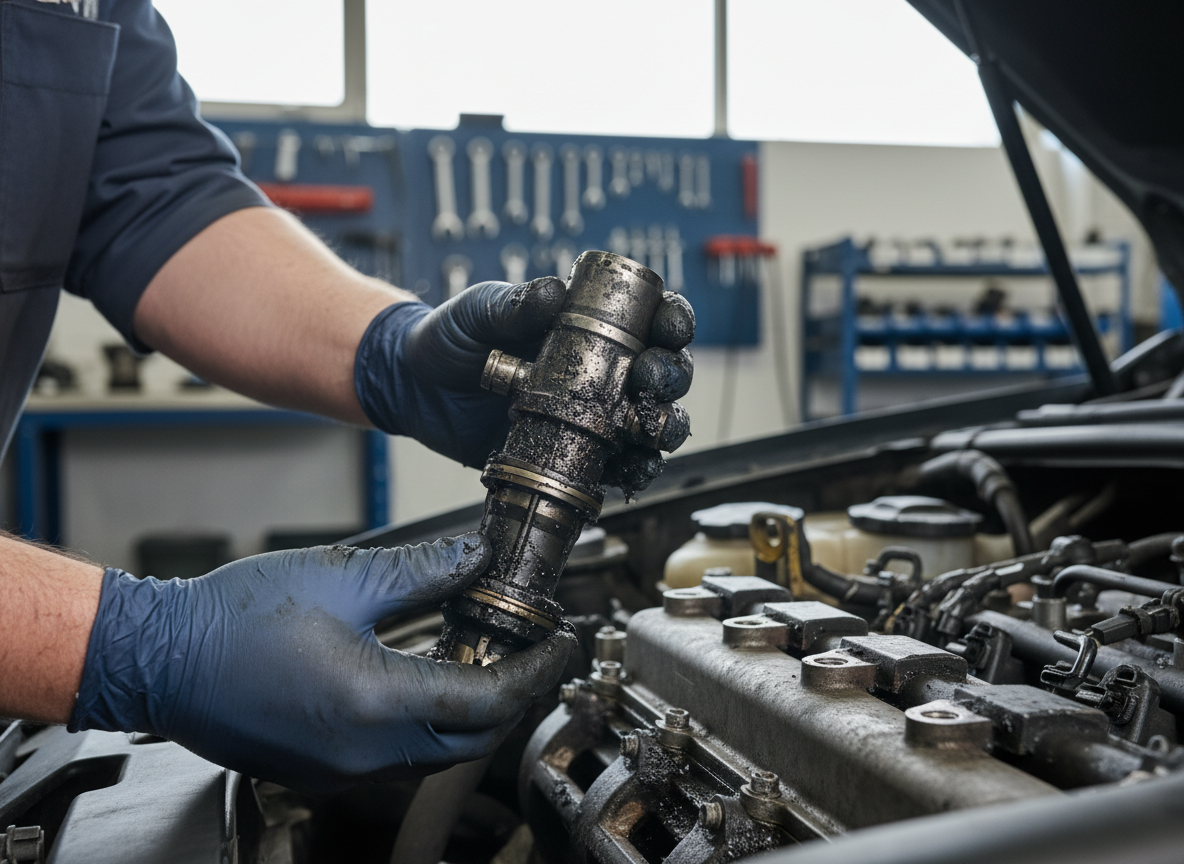
The reason swirl flaps have the reputation they do is a specific failure mode: a flap or its spindle coming loose and being drawn into the cylinder, with expensive consequences. It is a real mechanism. It is also the part of the story most heavily inflated online.
We are not going to attach a percentage to it, because nobody publishes one and any figure you see quoted is somebody’s estimate wearing a lab coat. What we will say is this: the risk is concentrated in the older designs and in engines that have already been showing intake symptoms for a long time. A car with a fresh, isolated fault code is in a very different position from one that has rattled at idle for two years.
The practical conclusion is unglamorous. Investigate early symptoms rather than living with them. Most of the bad outcomes we hear about started with something the owner had been ignoring since the previous MOT.
What most guides get wrong
They jump straight from “swirl flaps can fail” to “so have them removed”, skipping the diagnosis entirely. Plenty of cars with intake symptoms do not have a swirl flap problem at all. Removing a healthy component to fix a fault it was not causing is an expensive way to still have the fault.
The software side, and its limits
This is where we get the most questions, so it is worth being precise.
Software controls the actuator that moves the flaps, and software is what stores and reports the fault when the ECU decides the actuator is not doing what it was asked. Change the software and you change how the ECU treats that signal. What you do not change is the physical condition of the linkage.
That distinction matters at MOT. Swirl flaps themselves are not on the list of visible emission control components a tester must check on a diesel — that list is diesel oxidation catalysts, diesel particulate filters, exhaust gas recirculation valves and selective catalytic reduction valves. But the same section of the inspection manual makes an engine management light that is inoperative or indicating a malfunction a Major defect on diesels first used on or after 1 July 2008. An illuminated light fails the test whatever caused it.
So a car with a genuine, active intake fault does not become roadworthy because the message stopped appearing on the dashboard. If you want to know what has already been recorded against a vehicle, the free MOT history check on GOV.UK will show past advisories and failure reasons, which is often more informative than the seller’s description.
There is a narrow, legitimate role for fault code work once a fault has been properly resolved and a redundant message is all that remains. There is no legitimate role for it while the fault is still live, and we will tell you which situation you are in before quoting anything.
What a sensible diagnosis looks like
Four steps, in order, and none of them start with a decision about the flaps.
1. Read the codes properly
Not just the code number — the freeze frame data that came with it, and whether it is current or historic. A fault stored once eighteen months ago is background noise.
2. Watch the actuator live
Commanded position against actual position, at idle and on a light throttle, tells you within a minute whether the mechanism is following instructions. This is the single most useful test and it is routinely skipped.
3. Rule out the neighbours
Boost pressure, EGR position, intake air temperature and mass airflow all get checked in the same session, because they produce overlapping symptoms. If the engine light has been on for a while, our overview of what actually triggers the engine management light covers the usual suspects.
4. Only then decide
With live data in front of you, the choice between repair, replacement of the linkage or manifold, and doing nothing yet becomes a straightforward conversation rather than a gamble.
If your BMW is otherwise healthy
One thing worth saying, because it comes up whenever this subject does. A swirl flap concern is not a reason to write off an otherwise sound diesel. These engines run to high mileages when the intake side is looked after and the oil is changed on time. If the car is in good order and you were considering calibration work, our guide to BMW ECU work in the West Midlands sets out what that involves — after the diagnostics, not instead of them.
Engine light on and not sure what is causing it?
We read the codes, watch the live data and tell you what the vehicle is actually doing before anything is recommended. Mobile diagnostics at your home or workplace across the West Midlands.
BMW Swirl Flap FAQ
What are the symptoms of failing swirl flaps?
Typically an engine management light with a stored intake or actuator fault, a rough or hunting idle from cold, a flat spot below around 2,000rpm, and sometimes a light rattle from the intake side. None of those symptoms is unique to swirl flaps, which is why live data matters more than the code alone.
Which BMW engines have swirl flaps?
They are associated with the four and six-cylinder BMW diesels of the 2000s and early 2010s, including the M47 and M57 families and the later N47 and N57. Specification varied across the production run, so the safest answer for any individual car is to check the intake manifold rather than rely on the engine code.
Can swirl flaps damage an engine?
The failure mode people worry about — a flap or spindle entering a cylinder — is real, but it is not the usual outcome and no reliable figure exists for how often it happens. The sensible response is to investigate intake symptoms early rather than to assume either the worst or nothing.
Do swirl flaps affect the MOT?
Not directly. They are not among the visible emission control components a tester has to inspect on a diesel. Indirectly they can, because an engine management light indicating a malfunction is a Major defect on diesels first used on or after 1 July 2008, and a vehicle fitted with a DPF that emits visible smoke of any colour fails as well.