 Skip to content
ECU Remapping · Performance Tuning · West Midlands
Stage 2 Remap: What’s Involved, What Changes, and Who It’s For
A Stage 2 remap is often talked about in performance circles, but it’s frequently misunderstood. It isn’t just a bigger version of a Stage 1 remap — it requires specific hardware changes first and isn’t suitable for standard vehicles. Here’s a clear breakdown of what it actually involves.
The Difference Between Stage 1 and Stage 2
To understand Stage 2, it helps to be clear on Stage 1 first. A Stage 1 remap is designed for a stock, unmodified vehicle. The calibration is written to work within the tolerances of the standard parts — the standard intercooler, exhaust, fuelling system.
Stage 2 goes further. The ECU calibration is written to take advantage of hardware upgrades that have already been fitted. Because the vehicle’s components have been changed to handle more power, the software can be adjusted accordingly.
The critical point: Stage 2 software on a standard vehicle is a bad idea. If the hardware isn’t there to support the map, components can be put under stress they weren’t designed to handle.
What Hardware Is Typically Required for Stage 2?
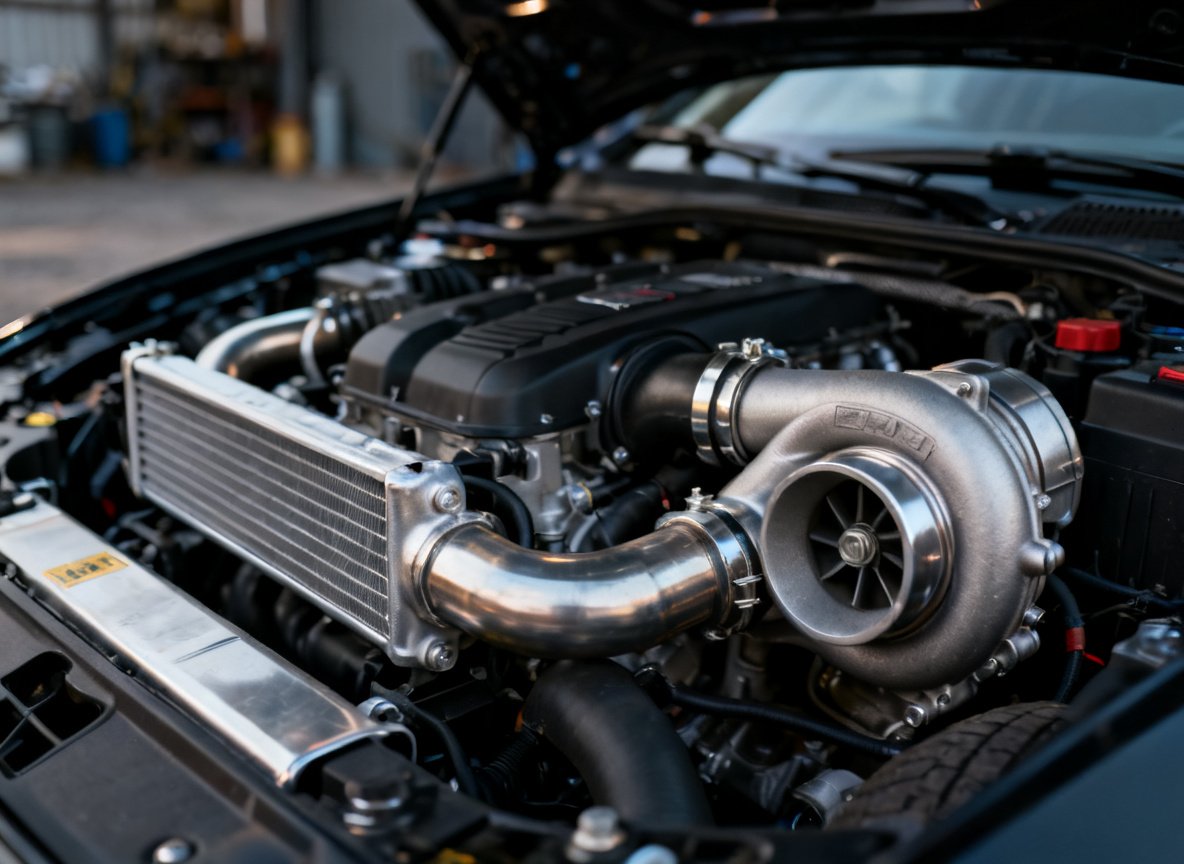
The specific requirements vary by vehicle and target power output, but a Stage 2 build commonly includes: an uprated intercooler to handle increased charge temperatures, a performance exhaust or downpipe to reduce back pressure, an uprated induction or intake for improved airflow, upgraded fuelling where the platform requires it, and sometimes a clutch upgrade on front-wheel drive vehicles with significant power increases.
What Does a Stage 2 Remap Actually Change?
At its core, a Stage 2 remap is still ECU software. The same parameters are being adjusted — boost pressure, fuelling maps, timing, throttle response — but the target figures are higher because the hardware now supports them.
Boost Pressure
On turbocharged vehicles, one of the key benefits of an uprated intercooler is the ability to run higher boost pressure without the charge temperature rising to the point where the ECU pulls timing or power as protection. A Stage 2 calibration can take advantage of this.
Fuelling and Timing
With better airflow from an uprated intake and exhaust, the fuelling maps can be adjusted to match. Timing can also be advanced further in some cases, improving combustion efficiency and responsiveness.
Driveability
A good Stage 2 calibration should still be driveable every day. The goal isn’t to produce maximum power at the expense of everything else — it’s to make the power delivery smooth, predictable, and suited to how the driver uses the car.
Custom Calibration, Not a Template
Stage 2 work isn’t done from a generic map. The calibration needs to account for the specific hardware fitted, the vehicle’s condition, and sometimes the driver’s preference for power vs. fuel economy balance. A proper Stage 2 remap is a custom file, not an off-the-shelf tune.
Is a Stage 2 Remap Right for Your Vehicle?
The honest answer for most drivers is: probably not yet. The majority of vehicles on UK roads are running standard hardware, which makes Stage 1 the appropriate starting point.
Stage 2 makes more sense if you’ve already invested in performance hardware, you’re building a car specifically for performance use, or you’ve previously had a Stage 1 remap and want to take things further with appropriate supporting modifications.
Vehicles That Commonly See Stage 2 Work
Hot hatches and performance saloons are common candidates — platforms like VAG group cars (Golf, Seat Leon, Skoda Octavia vRS) that have well-developed aftermarket support and a clear upgrade path. Some diesel platform vehicles also suit a Stage 2 approach, particularly where towing performance or sustained heavy load use is the goal.
Checking Suitability Before You Commit
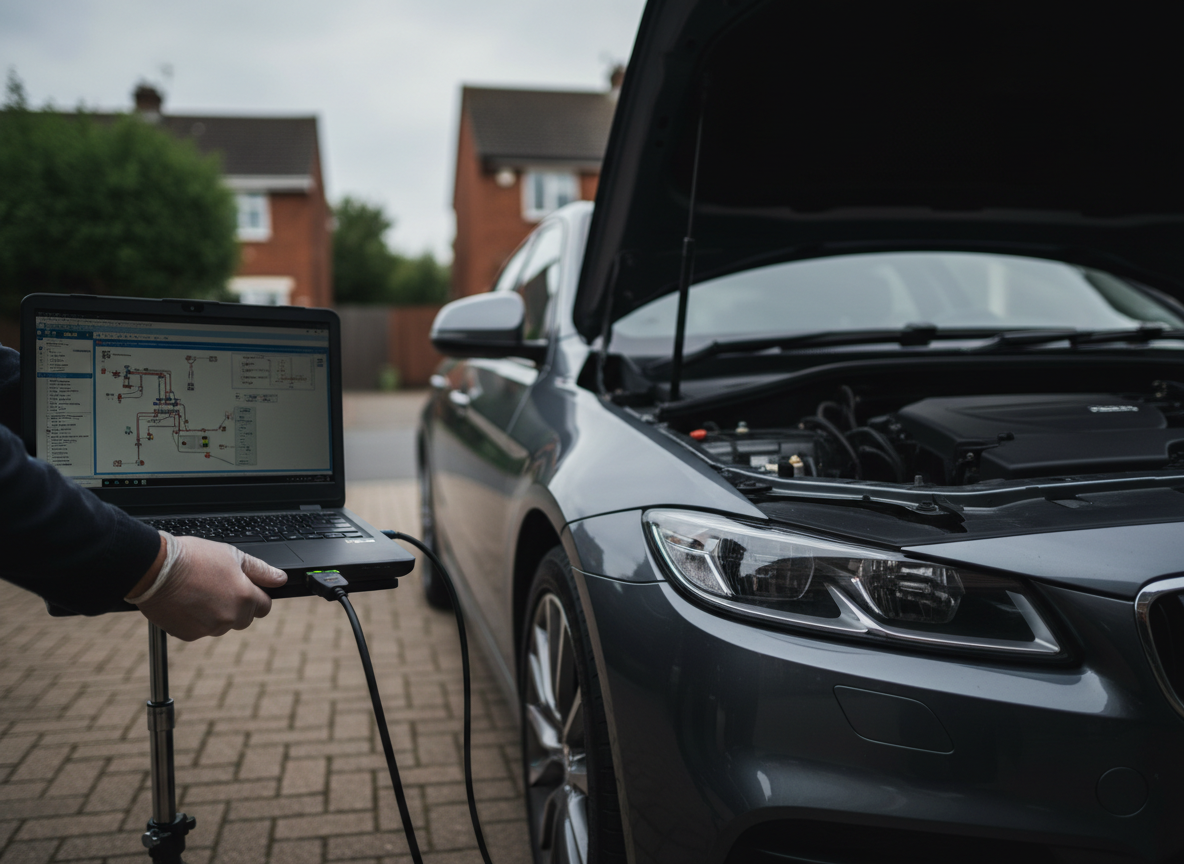
Before considering Stage 2, it’s worth having a diagnostic check to confirm the vehicle’s base health. FM Auto Remapping offers diagnostics and repair services alongside remapping, so this can be assessed as part of the same conversation.
The Process at FM Auto Remapping
FM Auto Remapping offers a mobile service across the West Midlands, meaning the work is carried out at your home or workplace rather than at a garage. This applies to Stage 2 as much as Stage 1.
The process for Stage 2 typically involves a pre-remap assessment, a detailed discussion of what hardware has been fitted and its specification, reading the existing ECU data, producing a custom calibration matched to the car’s actual configuration, and a post-remap check to confirm everything is running correctly.
What Stage 2 Won’t Do
A Stage 2 remap will optimise the software for your hardware combination — but it won’t overcome fundamental mechanical limitations. A worn engine, marginal boost control, or injectors past their service life will limit what any calibration can achieve.
Similarly, a Stage 2 calibration on a car with a clutch that’s already slipping isn’t going to improve things. If there are mechanical issues, sorting those first is the right approach before any remap work.
Not Sure Where You Stand?
If you’ve got modifications but aren’t certain whether they qualify for Stage 2, or if you’re not sure what stage your vehicle is currently mapped to, get in touch and explain what work has been done. The team can advise on the most appropriate next step. See the Stage 1 and Stage 2 remap page for more.
If you’re weighing up whether a remap is worth the cost before deciding on stage, our car remap cost guide for the West Midlands covers current pricing for both Stage 1 and Stage 2 in detail.
Mobile Stage 2 Remapping Across the West Midlands
FM Auto Remapping provides custom ECU remapping including Stage 2 work for eligible vehicles. The service is fully mobile — covering Willenhall, Birmingham, Wolverhampton, Walsall, Dudley, Coventry, and surrounding areas.
Frequently Asked Questions
Can I go straight to Stage 2 without doing Stage 1 first?
You can, but only if the hardware modifications are already in place. Stage 2 is defined by the hardware, not the history of maps.
How much more power does Stage 2 add over Stage 1?
This varies significantly by vehicle and the hardware fitted. Results depend entirely on the specific build and platform.
Will a Stage 2 remap affect reliability?
A well-executed Stage 2 remap on properly modified hardware, carried out by an experienced tuner, should not negatively affect reliability. The risk comes from pushing beyond what the hardware supports, or using poor-quality base maps.
Does FM Auto Remapping offer Stage 2 for diesel vehicles?
Yes, Stage 2 work is available for appropriate diesel platforms where the right hardware modifications have been made. Get in touch to discuss your specific vehicle and setup.
About FM Auto Remapping
FM Auto Remapping is a mobile ECU remapping and diagnostics specialist based in Willenhall, covering the West Midlands. For DPF-related issues, sister brand DPF Clean Specialist offers dedicated cleaning and diagnostics services.
