 Skip to content
DPF Diagnostics & Solutions • West Midlands
DPF Won’t Regenerate: Causes, Warning Signs and What to Do Next
Your diesel has been showing the DPF light for weeks. You’ve tried a long motorway run — nothing. You’ve heard the engine rev itself at idle — still blocked. When DPF regeneration keeps failing, it’s rarely a one-thing problem. Here’s exactly what’s stopping it, and what West Midlands diesel drivers can do before it becomes a £1,500 replacement job.
Quick Answer: Why Does DPF Regeneration Fail?
DPF regeneration fails when the filter can’t reach or sustain the 550–600°C exhaust temperature needed to burn off trapped soot. The most common dpf regeneration failure causes include short-trip driving patterns, faulty differential pressure or temperature sensors, EGR valve problems, injector faults, and soot loading above 85% — where a forced regen by a specialist is the only reliable fix.
Why Diesel Regeneration Matters — and Why It Fails More Than It Should
The diesel particulate filter is designed to trap the soot particles produced during combustion. Every 300–500 miles, your car’s ECU attempts to burn off that accumulated soot through a process called regeneration — essentially incinerating the particles at temperatures above 550°C during normal driving.
Passive regeneration happens automatically when your exhaust gets hot enough on a fast road or motorway. Active regeneration kicks in when the car detects rising soot levels: it injects extra fuel to raise exhaust temperatures and triggers a burn cycle. According to the RAC, passive regeneration typically requires at least 20–30 minutes at sustained motorway speeds (60–70 mph) — a journey profile that most UK city drivers in Birmingham, Wolverhampton and Walsall rarely manage.
When active regen is repeatedly interrupted or when underlying faults prevent the exhaust from reaching temperature, soot loading climbs until the ECU trips a warning and eventually limits engine output — what drivers know as limp mode.
The key point: a failing regeneration cycle is almost always a symptom of something upstream, not a standalone filter fault. Fixing the filter without fixing the cause guarantees a repeat.
The Main DPF Regeneration Failure Causes
1. Short-Journey Driving Patterns
This is the single most common reason West Midlands diesel drivers end up in a garage. If your typical trip is under 10 miles at low speeds — school runs, town centres, stop-start commutes — active regeneration never gets a chance to complete. The cycle starts, the engine detects a stop is coming, and it aborts to avoid raw fuel entering the oil. Repeat this enough times and soot builds faster than it’s burned.
2. Faulty Differential Pressure Sensor
The DPF differential pressure sensor monitors the pressure difference across the filter to estimate soot loading. Carbon buildup in the small sensor pipes is the most common point of failure: the ECU receives an inaccurate reading, either triggering a regen when the filter is clean or — more damagingly — failing to trigger one when the filter is near-full. EEC research published in January 2026 confirms that sensor pipe blockage and connector corrosion account for a significant proportion of regeneration faults diagnosed as DPF-side issues that are actually sensor-side problems.
3. Exhaust Temperature Sensor Failure
Active regeneration is temperature-controlled. If one of the exhaust temperature sensors reads incorrectly — a common fault on higher-mileage VAG and Ford diesel engines — the ECU may abort the regen cycle before it’s complete. The result is a cycle that runs for 10 minutes, achieves nothing, and shows no fault code other than “DPF performance.”
4. EGR Valve Fault
A sticky or stuck EGR valve disrupts the air-fuel ratio during combustion, producing more soot per cycle than normal and loading the DPF faster than regeneration can clear it. If your EGR fault codes appeared around the same time as your DPF issues, the two are almost certainly connected. We cover the specific EGR valve fault symptoms in detail separately — an EGR fault left running for several months will typically result in a heavily over-loaded DPF.
5. Injector and Combustion Issues
Poor or misfiring injectors produce incomplete combustion and excess soot. If your diesel is burning more fuel than usual, running rough at idle, or producing visible black smoke, injector diagnostics should come before any DPF work. Forcing a regen on an engine with a fuelling fault will typically fail immediately and risks damaging the filter.
6. Oil Dilution
Active regeneration injects small amounts of fuel to raise exhaust temperatures. On older engines, some of this fuel enters the sump rather than the exhaust stream, gradually diluting the engine oil. A tell-tale sign: your oil level creeps up between services. Heavily diluted oil reduces lubrication quality and can introduce particulates that block the filter at a molecular level — damage no forced regen will reverse.
7. Soot Loading Above 85%
Once soot loading crosses approximately 85%, passive and active regeneration become physically impossible — the back-pressure is too high for exhaust gases to flow at regeneration temperature. At this point, only a stationary forced regeneration via diagnostics laptop, or a professional DPF clean, can restore function.
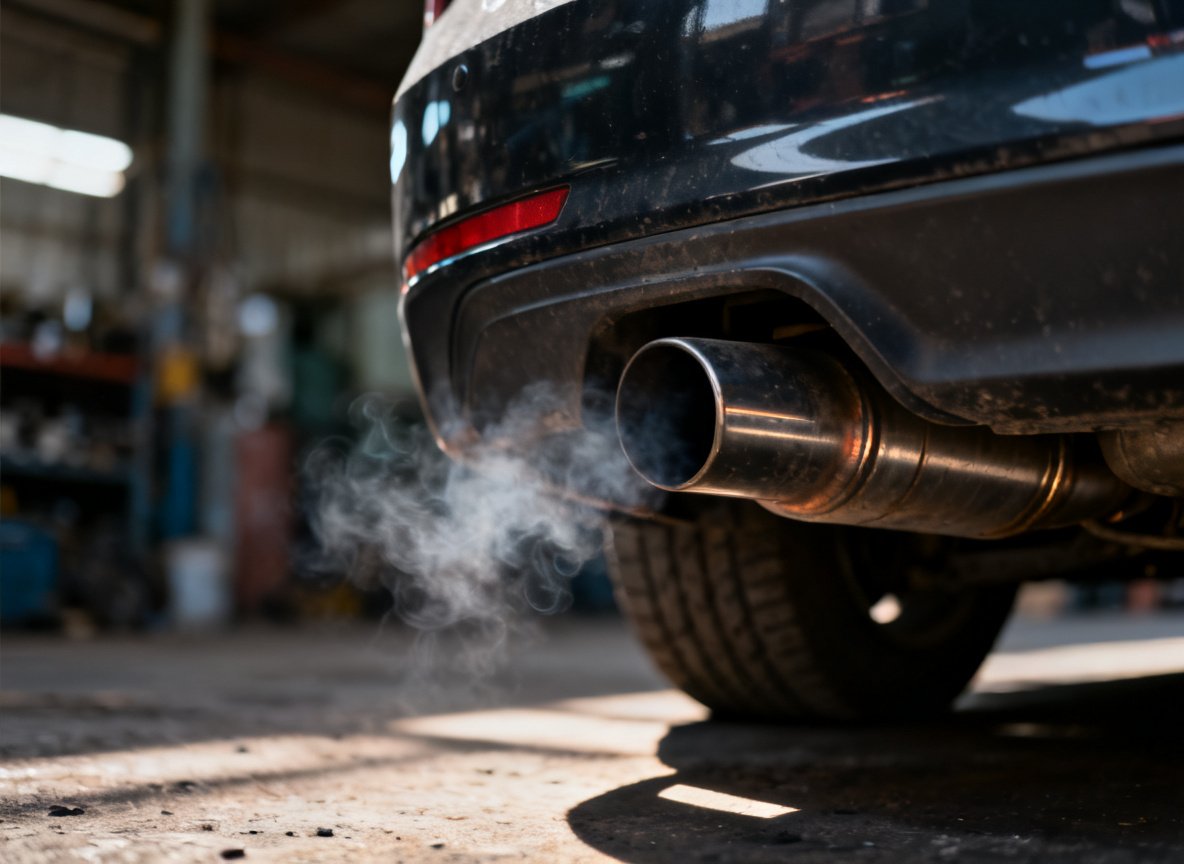
Warning Signs Your DPF Regeneration Is Failing
Most drivers notice a combination of these symptoms before the full DPF warning light appears:
- DPF or engine management light on the dashboard — the most obvious signal; don’t ignore it for more than a few days
- Power loss or sluggish acceleration — the ECU limits engine output to protect the exhaust system as soot loading rises
- Increased fuel consumption — more frequent failed regen attempts burn extra fuel without clearing soot
- Engine revving at idle without touching the accelerator — the ECU attempting an active regeneration cycle
- A faint fuel smell from the exhaust — unburned fuel from post-injection during a failed regen cycle
- Limp mode (below 3,000 RPM limit) — the late-stage signal that the ECU has restricted the engine to prevent filter damage. See our guide to limp mode causes for full details.
If you’re currently in limp mode, do not attempt a long motorway run. High-speed driving with a severely blocked DPF can cause the filter to crack under thermal stress.
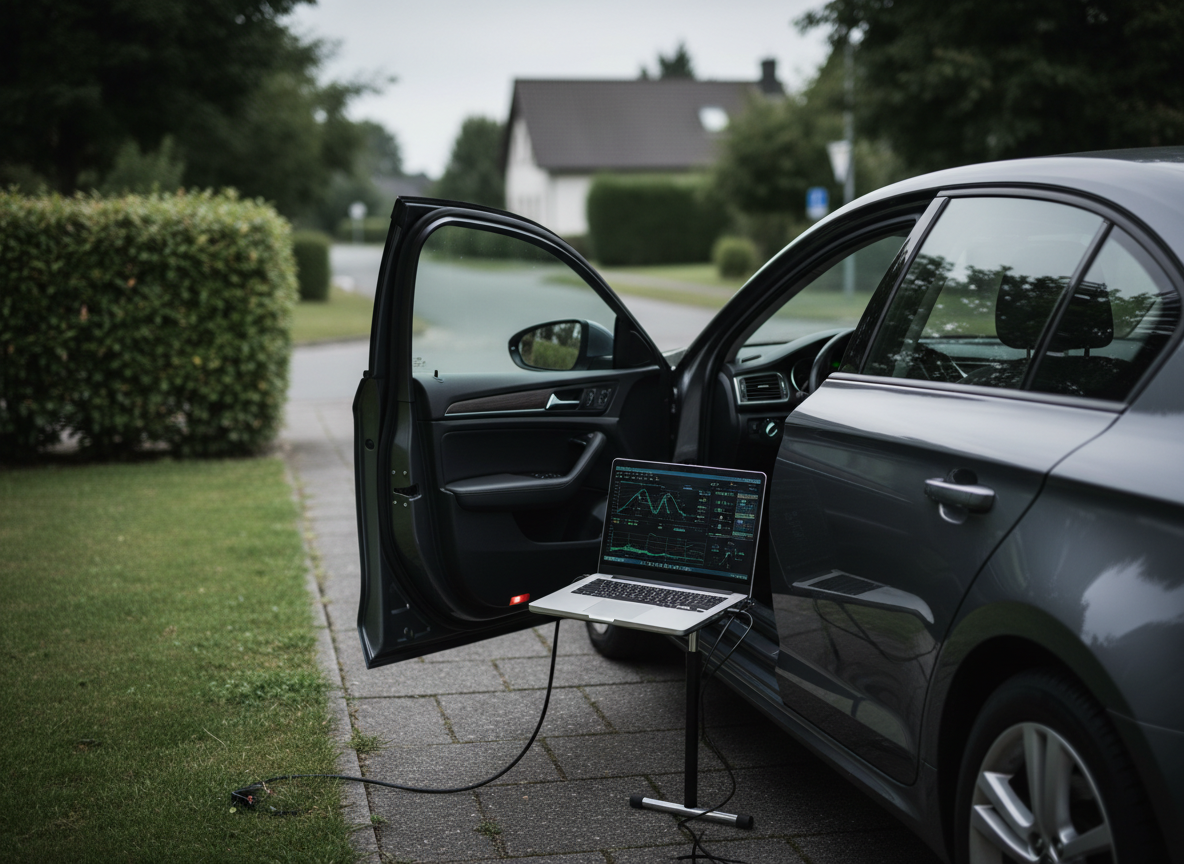
What to Do When DPF Regeneration Keeps Failing
Step 1: Get a Full Diagnostic Scan
Not just a basic code read — a live-data diagnostic that shows DPF soot loading percentage, differential pressure readings, and exhaust temperature sensor values in real time. This tells you whether the issue is the filter itself, the sensors, or an upstream fault.
Step 2: Fix the Root Cause First
If diagnostics reveal an EGR fault, a sensor pipe blockage, or injector issues, resolve those before any DPF treatment. Cleaning or regenerating a filter that will immediately re-block is money wasted. At FM Auto Remapping, we carry out a full DPF diagnostic and solution service covering both the filter and the upstream causes.
Step 3: Professional Forced Regeneration or DPF Clean
For soot loading between 60–85%, a garage-forced stationary regeneration via diagnostic laptop can restore the filter to working condition. Above 85%, a professional ultrasonic or chemical DPF clean is needed. Both services are available as part of our mobile DPF service across Willenhall, Birmingham, Wolverhampton, Walsall, Coventry and surrounding areas. Our sister brand DPF Clean Specialist also provides specialist commercial DPF cleaning across the region.
Step 4: Consider Whether a Remap Helps Long-Term
On engines where an EGR fault was a contributing factor, an EGR solution alongside a calibrated remap can change driving parameters to make regeneration more efficient and less likely to abort mid-cycle — particularly relevant for urban fleet drivers who can’t change their journey patterns.
Frequently Asked Questions About DPF Regeneration Failure
How do I know if my DPF regeneration has failed?
The clearest signs are a DPF or engine management warning light alongside reduced power or increased fuel consumption. If your car is running an active regen cycle (engine revving at idle) and the DPF light stays on afterwards, the regen failed to complete. A live diagnostic scan showing soot loading percentage confirms it definitively.
Can I force a DPF regeneration myself?
A sustained 30-minute drive at 60–70 mph can sometimes complete a partial regeneration on lightly loaded filters. However, if your DPF warning light is already on or you’re in limp mode, this is unlikely to work and can damage a severely blocked filter. A forced stationary regeneration via diagnostic equipment is far more reliable once soot loading is over 60%.
How long does a DPF forced regeneration take?
A garage-forced stationary regeneration typically takes 20–45 minutes once the diagnostic laptop is connected. The technician monitors exhaust temperatures and soot loading in real time. If the filter is too heavily loaded to respond, a full DPF clean (chemical or ultrasonic) is the next step, which usually takes half a day.
What happens if DPF regeneration keeps failing?
Repeated failed regenerations allow soot loading to climb until the filter is physically blocked, typically requiring professional DPF cleaning or replacement costing £1,000–1,500. Catching and resolving the underlying fault early — whether a sensor, EGR, or injector problem — avoids this outcome.
DPF Problems in the West Midlands? We Come to You.
FM Auto Remapping provides mobile DPF diagnostics, forced regeneration, and full DPF solutions across Willenhall, Birmingham, Wolverhampton, Walsall, Coventry, Dudley and surrounding areas. No garage visit needed.
About the Author
Reviewed and signed off by FM Auto Remapping— mobile ECU remapping and DPF specialists based in Willenhall, covering the West Midlands. Published: 22 September 2026. Updated: 22 September 2026.
