 Skip to content
Exhaust Tuning West Midlands · Hardware vs Software
Exhaust Tuning in the West Midlands: Do Intake and Exhaust Upgrades Do Anything Without a Remap?
Published by FM Auto Remapping — last updated
A customer near Walsall rang us last year having spent close to a thousand pounds on a stainless cat-back system and a cone filter. The car sounded transformed. On the road it felt, in his words, “exactly the same”. He wanted to know what had gone wrong.
Nothing had. That is simply what happens when you improve the plumbing of a turbocharged engine and leave the software alone.
Do exhaust and intake upgrades need a remap?
On a modern turbocharged engine, yes — in almost every case. The ECU holds fixed boost, fuelling and torque targets. Improving airflow lets the engine hit those same targets more easily rather than exceed them, so measured power barely moves until the software is recalibrated to use the extra flow.
Why a stock ECU quietly cancels out your hardware
A naturally aspirated engine from thirty years ago responded to breathing modifications directly. More air in, more fuel, more power. That relationship is largely gone.
A modern turbocharged engine is a closed-loop system. The ECU is not asking “how much air can I get?” It is asking “how do I hit the boost and torque figure the manufacturer told me to hit?” When you reduce restriction, the turbo reaches that same target with less effort and the wastegate simply opens a fraction earlier.
The gain has not been lost. It has been handed back to the engine as reduced load. Efficiency improves, temperatures often drop slightly, and the car may feel marginally crisper — but the number on a rolling road moves very little, because nothing has told the ECU it is allowed to move.
This is also why a car that feels flat after modification is usually not faulty. We see the same pattern from the other direction in cars that feel slower after a remap: perception and measurement come apart, and the software is what reconciles them.
Component by component: what actually needs software
Cat-back exhaust — verdict: sound, not power
Everything behind the catalytic converter is the least restrictive part of the system on a road car. Replacing it changes tone and, on some cars, saves a little weight. On a stock map, expect no meaningful power change. A remap afterwards will not gain much from the cat-back either — it was never the bottleneck.
Downpipe or sports cat — verdict: needs a remap, and needs care
This is the part of the exhaust that genuinely restricts a turbo, because it sits immediately after the turbine. Free it up and the turbo can spool harder — but only if the map is rewritten to take advantage. Fitted without recalibration, a freer downpipe can make boost control less stable rather than more powerful.
The legal position matters here. On vehicles first used on or after 1 September 2002, manufacturer-fitted emission control equipment that is missing, obviously modified or obviously defective is a Major MOT defect. A high-flow sports cat that remains a functioning catalyst is a different proposition to a decat pipe, and only one of those belongs on a road car.
Induction kit or panel filter — verdict: almost never the limiting factor
Factory airboxes on modern cars are far better than their reputation. A drop-in panel filter is sensible maintenance. An open cone filter mostly changes induction noise, and in a hot engine bay can draw warmer air than the standard system it replaced. Neither will show up meaningfully on a dyno without a remap, and with one, the map is doing the work.
Intercooler — verdict: enables consistency, not peak figures
An uprated intercooler rarely adds peak power. What it adds is the ability to hold power. On a mapped car doing repeated hard pulls, towing, or motorway work in summer, lower intake temperatures mean the ECU pulls less timing and the car does not soften after the third run. It is a supporting modification for software, not an alternative to it.
Turbocharger upgrade — verdict: meaningless without a remap
A larger turbo on a factory map is the clearest example of the whole principle. The ECU will simply hit its original boost target using less of the new turbo’s capability. Every bit of the upgrade lives in the calibration. This is also hardware work, not mobile software work — and if the engine itself changes, remember DVLA requires you to update your V5C when the engine or cylinder capacity changes.
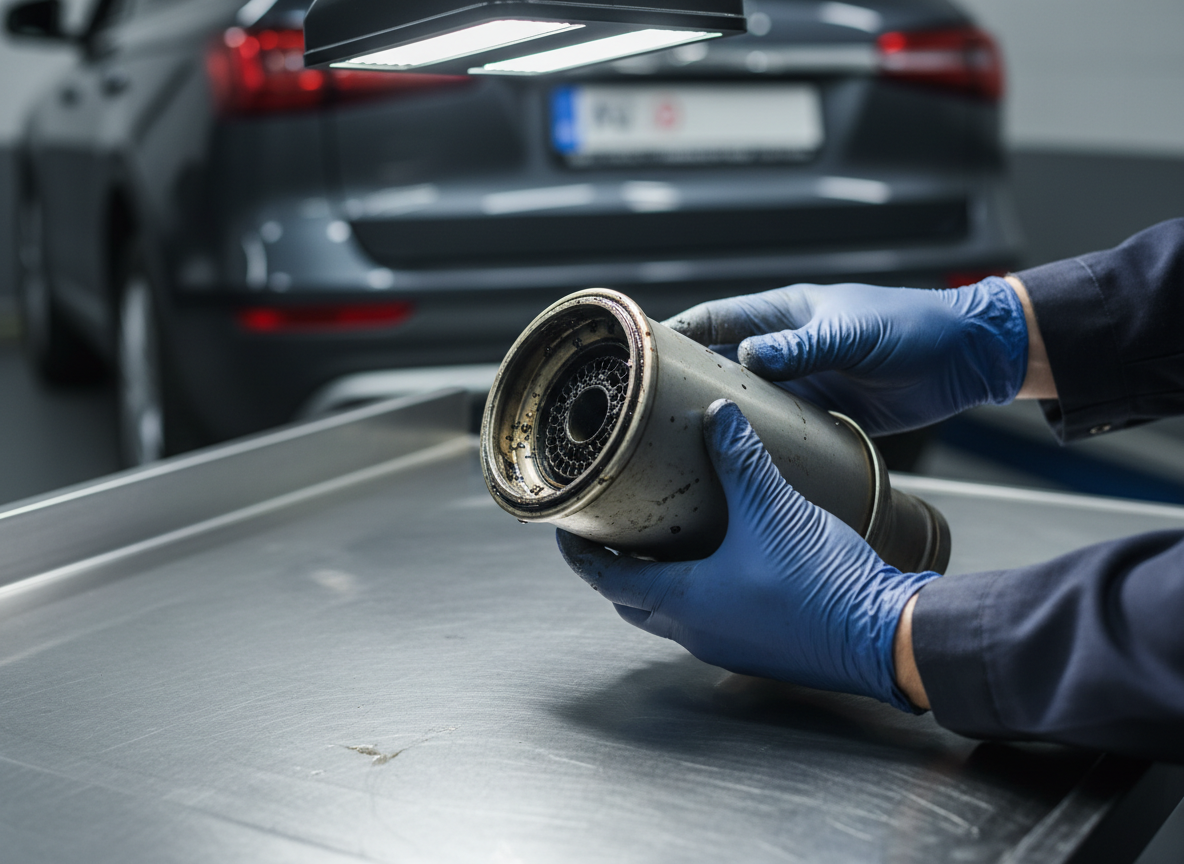
DPF — verdict: not a performance part, and not optional on the road
Diesel drivers often reach for the filter first. On the road that route is closed: since February 2014 a vehicle automatically fails the MOT if a DPF fitted as standard is no longer present, whatever the smoke reading. A blocked filter is a fault to be diagnosed and cleaned, not a restriction to be tuned around. Removal work is off-road and motorsport use only.
The order that saves money
Software first, hardware second — and only the hardware the software has run out of. A Stage 1 remap on a healthy standard car costs a fraction of a full exhaust system and produces a change you can feel from the first roundabout. Once that is on the car, you know what the engine is genuinely short of.
So what does Stage 2 actually require?
“What do you need for a Stage 2 remap?” is one of the most common questions we get, and the honest answer is that it depends on the engine rather than on a shopping list.
Stage 2 is not a bigger file. It is a calibration written for a car whose airflow hardware has already been changed — typically a less restrictive downpipe or sports cat, sometimes an intercooler, occasionally an intake path. Load that file onto a standard car and it is not more power, it is a map asking for flow the vehicle cannot supply.
Which is why the sequence matters. Hardware, then the software written for that hardware. Our full Stage 2 remap guide covers what changes, who it suits and where it stops being sensible for a daily driver. If you have not been mapped at all yet, the more useful comparison is Stage 1 against a standard car.
The MOT side of exhaust tuning
There is no decibel limit published for the MOT. The tester revs the engine to around 2,500rpm and applies judgement: exhaust noise must not be unreasonably above the level expected from a similar vehicle with a standard silencer in average condition. Excess noise is a Major defect and therefore a fail.
That standard is survivable for most quality road systems and unsurvivable for a decat straight pipe. Separately, your insurer needs telling about an exhaust change even though DVLA does not — the V5C has no field for it, but a policy does.
None of this is an argument against modifying a car. It is an argument for knowing which of your money is buying sound, which is buying consistency, and which is buying performance — because on a turbocharged engine those are three different purchases.
Exhaust and intake tuning: frequently asked questions
Do I need a remap after fitting a new exhaust?
For a cat-back system, no — there is nothing for the map to reclaim. For a downpipe or sports cat, yes. That section genuinely restricts the turbo, and without recalibration you get altered boost behaviour rather than extra power.
Does a performance air filter add power on its own?
Not in any way you will measure on a modern turbocharged car. The standard airbox is rarely the restriction, and the ECU holds the same targets regardless of how easily the air arrives. A quality panel filter is good maintenance; treat it as maintenance, not tuning.
What do you need for a Stage 2 remap?
Typically a less restrictive downpipe or high-flow sports cat, and on some engines an uprated intercooler or intake. The exact requirement is engine-specific. The important part is that the hardware goes on first and the file is written for it — a Stage 2 map on standard hardware is not a Stage 2 car.
Will an aftermarket exhaust fail the MOT?
Only if it is unreasonably louder than a standard system on a similar vehicle, or if fitting it removed emissions equipment the car was built with. A well-made cat-back on a road car usually passes without comment. A decat pipe on a post-2002 vehicle does not.
Get the software right before you spend on parts
FM Auto Remapping is a mobile ECU remapping specialist covering Birmingham, Wolverhampton, Walsall, Willenhall, Solihull, Coventry, Dudley and West Bromwich. Tell us what is on the car and we will tell you honestly what a remap will and will not do.
About the author
FM Auto Remapping is a West Midlands-based mobile ECU remapping and vehicle software specialist working from Willenhall across diesel and petrol vehicles. We calibrate engine and gearbox software; we do not fit exhaust or intake hardware. MOT and registration points in this article are taken from current DVSA and DVLA guidance.
