 Skip to content

ECU Software
ECU Software Options Beyond a Remap: What Else Can Be Changed and What Cannot
The DVSA’s MOT inspection manual settles most of this argument in one sentence: if an engine has been modified in any way, it still must meet the exhaust opacity requirements for the age of the vehicle. That is the line every one of the ECU software options on offer has to sit on the right side of — and it is the line most lists of ECU software options never mention.
The short answer
ECU software can change how the engine is controlled — fuelling, boost, throttle response, gearbox shift behaviour, and which sensors the ECU acts on. It cannot change what is physically bolted to the car, and it cannot make a vehicle legal on the road if the change stops it meeting the emissions standard it was approved to. Everything else is detail.
One distinction explains nearly every question we get
People ask about ECU work as if it were one menu. It is really two.
Calibration changes alter the numbers the ECU already uses. Injection timing and quantity, boost targets, torque limits, throttle mapping, shift points on an automatic. The hardware is untouched; the engine simply follows different instructions.
Control-strategy changes alter what the ECU does with a given input, or whether it acts on that input at all. Turning off a routine, changing a threshold, suppressing a stored fault. Nothing physical changes here either, but the consequences reach further — because a routine that is switched off was usually doing something.
What software never does is the third category: hardware. A blocked filter, a seized actuator, a worn injector, a failed sensor. Software can hide the symptom. It cannot repair the part. That sounds obvious written down, and it is still the single most common misunderstanding we deal with on the phone.
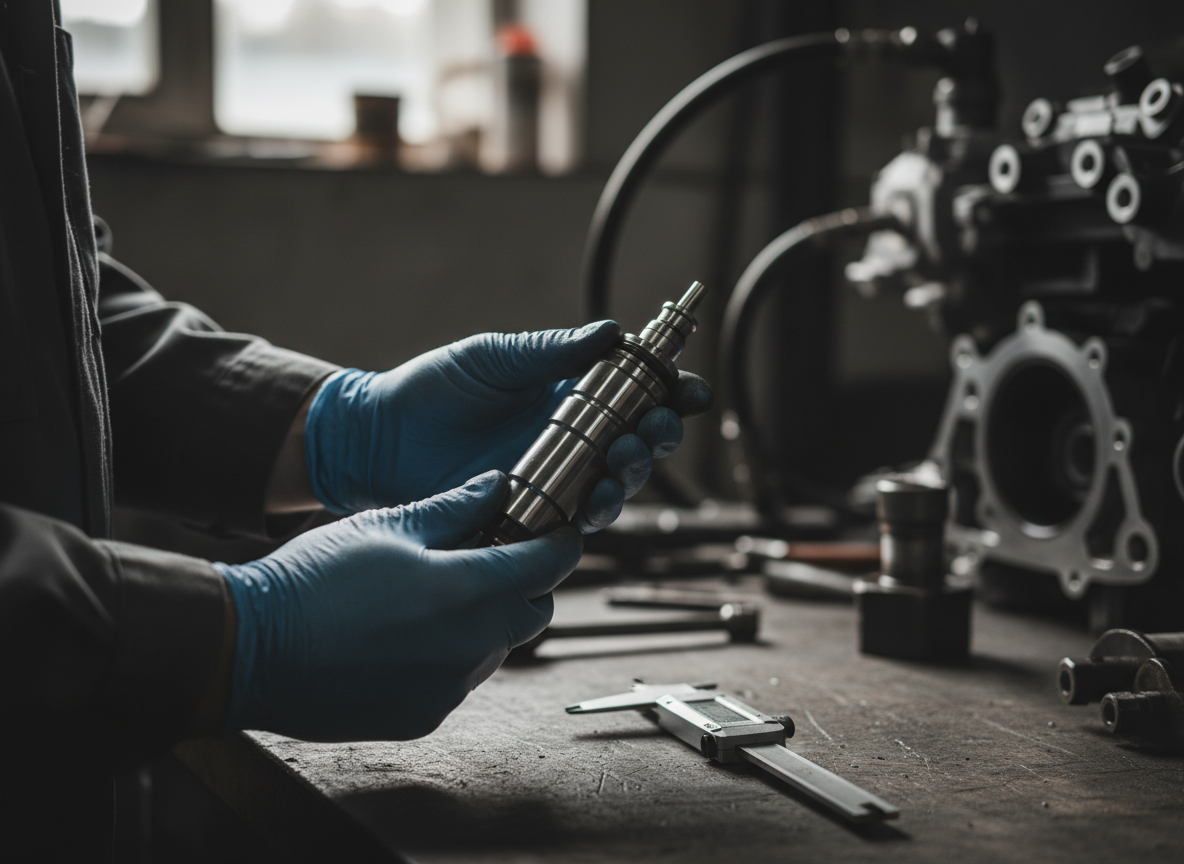
ECU software options: what can be changed and what cannot
Here is the honest version, with the constraint attached rather than buried in small print.
| Area | Can software change it? | The constraint that decides |
|---|---|---|
| Fuelling and boost targets | Yes — this is the core of a remap | The vehicle must still meet its age-appropriate emissions and smoke limits |
| Throttle response and pedal mapping | Yes | Driveability only; no emissions implication in itself |
| Torque limiters and gearbox shift behaviour | Yes, on many automatics | Mechanical limits of the clutch pack or torque converter still apply |
| Sensor readings the ECU acts on | Yes, technically | Where the sensor is part of the emissions system, this is where road-legality ends |
| Emissions hardware — DPF, EGR valve, SCR/AdBlue system | Software can change how they are controlled | Removing or defeating them takes the vehicle outside the standard it was approved to, and is an off-road matter |
| Worn or failed mechanical parts | No | Nothing in the ECU replaces a component |
| Engine internals, turbo size, injector capacity | No | Physical limits; software can only work within them |
Notice that the right-hand column, not the middle one, is doing the real work. Almost everything is technically possible. The useful question is which changes leave you with a car you can tax, insure and MOT normally.
Where the legal boundary actually sits
This is worth getting right, because the internet is full of confident nonsense about it.
An MOT tester is not looking for a remap. There is no scan of your calibration file. What the tester does check, on a diesel, are the visible and identifiable emission control components — diesel oxidation catalysts, diesel particulate filters, exhaust gas recirculation valves and selective catalytic reduction valves. Manufacturer-fitted emission control equipment that is missing, obviously modified or obviously defective is a Major defect. So is evidence that the diesel particulate filter has been tampered with.
Then there is the measured side. A diesel first used on or after 1 January 2014 is tested against the smoke limit on its manufacturer plate, or against a default of 0.7 m⁻¹ where no plate value is shown. On a car fitted with a DPF, visible smoke of any colour during the metered check is a Major defect on its own.
Put those together and the position is simple. A calibration change that leaves the emissions hardware in place and the vehicle inside its limits is a normal modification. A change that takes the hardware out of the picture is a different conversation, belongs off-road, and needs to be discussed as such before anyone touches the car.
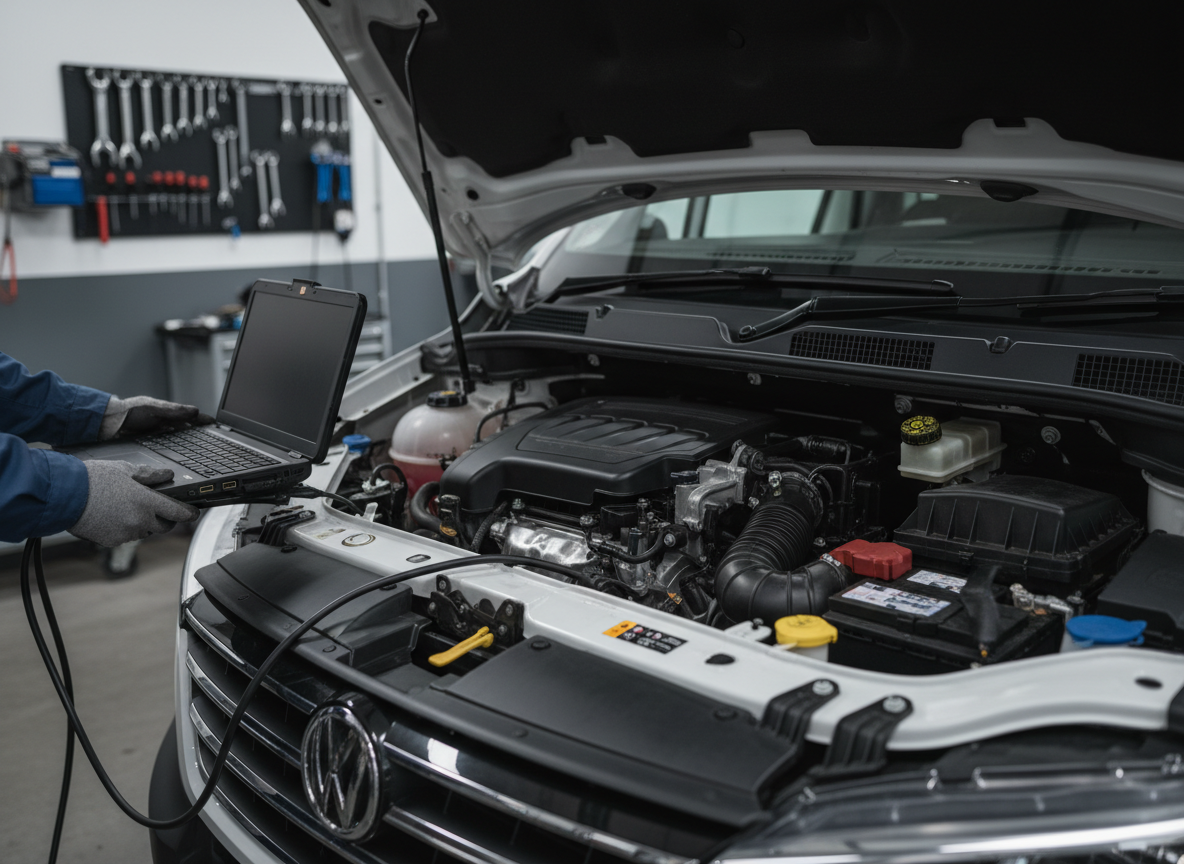
What most guides get wrong
They present the software menu as a list of features and treat legality as a footnote. It is the other way round. The legal and MOT position should decide which options are on your list in the first place — and on a road car it narrows the list considerably. We would rather have that conversation before the laptop comes out than after.
How to work out which category your request falls into
Three questions, in this order.
1. Is there a fault, or is this a preference?
A warning light, a limp mode event or a running problem is a fault. Software is not the starting point for a fault — diagnostics are. Reading live data first tells you whether you are looking at a sensor, a mechanical failure or a calibration issue, and that decides everything after. Our guide to the diagnostic checks worth doing before any ECU work covers what that session actually involves.
2. Does the change touch emissions hardware?
If the answer is yes, the road-legal route and the off-road route separate here, and they should be discussed as two different jobs rather than blurred into one quote.
3. Is anything else going to overwrite it?
A franchised dealer software update rewrites the ECU with the factory calibration, which removes whatever was there before. If your car is due one, the sequencing matters — we set out why in our note on what a dealer update does to an existing map.
Beyond that, there are individual services with their own answers: fault code removal has a narrow legitimate use and a very common misuse, and the difference between a stage one and stage two calibration is mostly a question of what hardware is already on the car. Each deserves its own page rather than a line in a list.
Three requests we turn down
A list of what is possible is only half useful. Here is where we stop, and why.
Silencing a light instead of finding the fault
If a warning lamp is on because a component has genuinely failed, suppressing the message leaves the failure in place and removes the only thing telling you about it. It also creates an MOT problem rather than solving one, because an engine management light indicating a malfunction is a Major defect in its own right. We would rather diagnose it and quote you for the actual repair.
Software as a substitute for a service
Cars arrive with soot-loaded filters, tired oil and a request for more power. Adding fuel to an engine that is already struggling to complete a regeneration makes the underlying problem arrive sooner. The order matters: get the vehicle healthy, then calibrate it.
Road-legal answers to off-road questions
Some requests only make sense on a vehicle that is never going to be tested or taxed for road use. That is a legitimate conversation for the right vehicle, but it is not something to slide into a road car quote. If a change would take a car outside the standard it was approved to, we say so plainly rather than describing it as a grey area.
A note on petrol
Most of this article reads as diesel because most of the questions are diesel. Petrol cars sit under the same principle with different components. The MOT rules for spark ignition engines look at catalytic converters, oxygen sensors and exhaust gas recirculation valves, and the same Major defect applies where manufacturer-fitted equipment is missing, obviously modified or obviously defective. Newer petrols with a particulate filter are increasingly in the same position diesels have been in for a decade.
Not sure which of these your car actually needs?
We read the ECU and the live data first and tell you what the vehicle is really doing — then what software can and cannot do about it. Mobile, at your home or workplace, across the West Midlands.
ECU Software Options FAQ
Can everything on a car be changed with ECU software?
No. Software changes how the engine is controlled, not what is fitted to it. Fuelling, boost, throttle response and shift behaviour are all calibration. A blocked filter, a failed sensor or a worn injector is hardware, and no software change repairs it — at best it changes how the car reacts to the problem.
Is changing ECU software legal in the UK?
Changing the calibration is not in itself an offence, but the vehicle still has to meet the emissions standard for its age, and manufacturer-fitted emission control equipment that is missing or obviously modified is a Major MOT defect. So the legality depends entirely on which change you are asking for, not on whether the ECU was touched.
Does ECU software work the same way on petrol as on diesel?
The principle is identical — calibration and control strategy on one side, hardware on the other. The components differ. Petrol engines are assessed on catalytic converters and oxygen sensors, diesels on the DPF, EGR and SCR system, and newer petrols with particulate filters are moving towards the diesel position.
Will an ECU software change show up at MOT?
Not directly — there is no calibration check in the MOT. What is checked is the outcome: the emission control components that are visible, the measured smoke level, and whether the engine management light is off. A change that leaves all three in order is invisible to the test. One that does not, is not.
